Custom Software Development
Tooba Web designs and builds web applications, dashboards, internal tools and integrations for businesses in the UAE and the Gulf, working remotely from Istanbul.
Custom software makes sense when your process is specific to your business and existing products force awkward workarounds. The project starts with a written scope, moves through agreed phases, and ends with working software whose source code belongs to you. We do not build mobile apps or online shops.
Last updated:
When custom beats off-the-shelf
Ready-made software is usually the right first answer. Custom work is worth considering when:
- Your team keeps copying data between spreadsheets and several tools.
- You pay for features you never use, and still lack the one you need.
- Your workflow is a real advantage that a standard product would flatten.
- You need systems to exchange data automatically.
If an existing product fits, we will say so. It can be cheaper and safer than building something new.
Useful questions before committing: who will use the system daily, what happens today when it fails, and how often will the process change? Stable processes with clear rules suit custom software best.
What we build
- Web applications with logins and roles, such as booking, approvals, client portals and quote handling.
- Dashboards that bring numbers from several sources into one view.
- Internal tools that replace shared spreadsheets and email chains.
- Integrations that connect your website, CRM, accounting or other systems through their APIs.
We do not build mobile apps, e-commerce shops or cloud-infrastructure projects.
Discovery and the scope document
Before development we run a discovery stage. We ask how work flows today, who uses the system, what data it holds and what must happen when something goes wrong. The result is a written scope document covering:
- The problem and the people involved.
- Features, listed as must-have and later.
- Screens or flows, usually as simple sketches.
- Integrations and data sources.
- What is not included.
- Acceptance criteria, so everyone knows what finished means.
Phases
Work normally runs in four stages: discovery and scope, design, development in short cycles with demonstrations, then testing and launch. You see working software early and can change direction before a feature is fully built. Changes outside the written scope are discussed and quoted separately, so surprises are rare.
Each cycle ends with a demonstration on a test version. You try it with real examples from your business, not just sample data, and tell us what to adjust. Launch includes a written checklist: data migrated, users trained, backups running and a rollback plan.
What drives effort
Cost depends on the work involved rather than the screen count. We quote on WhatsApp once the scope is clear. The main drivers are:
- Number of user roles and permissions.
- Complexity of business rules and calculations.
- Number and quality of outside systems to connect.
- Importing existing data.
- Reports, exports and notifications.
- Arabic and English interfaces, including right-to-left layout.
Ownership of source code
You should own what you pay for. Source code, database and documentation are handed over, hosted in accounts under your name where possible, so you are never locked in. Any open-source components keep their own licences, and we list them. We also write short handover notes, covering how to deploy, where settings live and which accounts the system relies on, so another developer could continue the work.
Security basics
We apply sensible foundations: encrypted connections, hashed passwords, role-based access, validated input, regular dependency updates, backups and logging of important actions. If the system holds personal data, UAE data protection rules may apply, so please check your obligations with a lawyer. Security is also an ongoing task, not a one-time feature. We also recommend separate test and live environments, so changes are tried safely before real users see them.
Maintenance and working remotely
After launch, software needs updates, backups, monitoring and small improvements. We offer maintenance on a written arrangement agreed on WhatsApp. Delivery is fully remote from Istanbul, one hour from UAE time: we share progress through video calls and test versions, and approvals are given in writing. Questions during the working day usually get an answer the same day on WhatsApp.
Frequently asked questions
Can you build a mobile app?
No. We build web applications that work well in a phone browser, but we do not develop native mobile apps.
Will I own the code?
Yes. Source code and documentation are handed over to you at the end, subject to open-source licences we disclose.
How long will it take?
It depends on the scope. After discovery we can give a realistic schedule in writing.
Can you connect software we already use?
Often, yes, if it provides an API or data export. We check this during discovery.
What if requirements change?
Small changes are normal. Anything outside the written scope is discussed and quoted separately before work starts.
Related pages
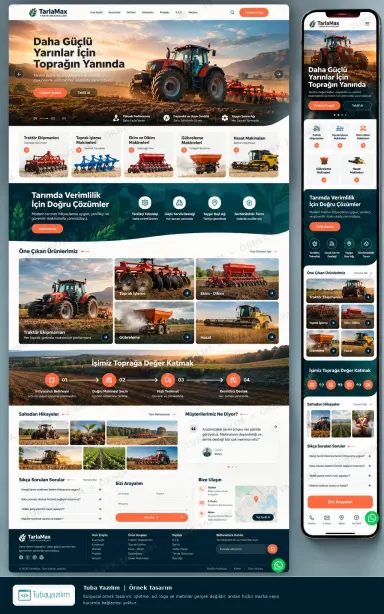
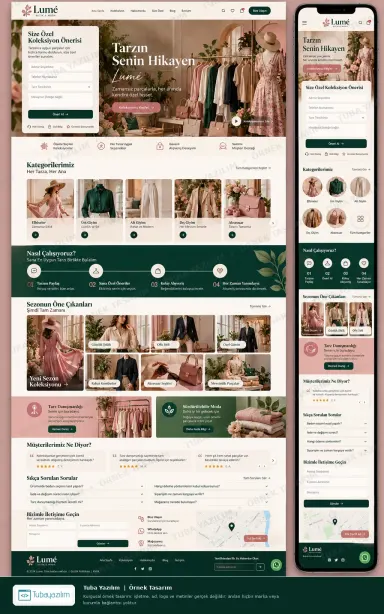
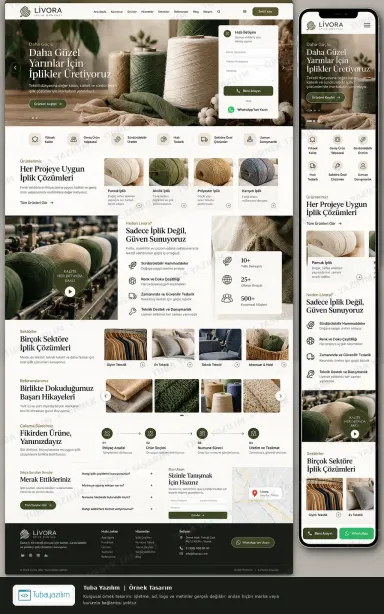
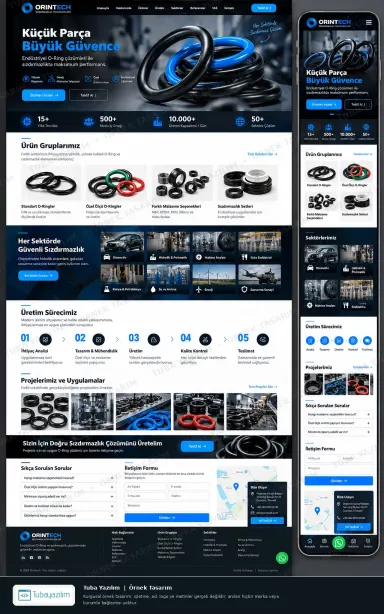
See a sample design for your own business
Browse fictional sample designs from hundreds of industries. Cannot see your type of business? Tell us what you do on WhatsApp and we will prepare a free sample design for you, with no obligation.