AI search optimisation (GEO) for businesses in Dubai
GEO means preparing your pages so AI assistants and AI summaries can find, understand and quote them correctly. This page explains what that involves and where it stops.
AI search optimisation, also called GEO or generative engine optimisation, is the practice of making a website easy for AI assistants and AI search features to read, understand and cite. It relies on clear answers, accurate facts, good structure and crawl access. It cannot guarantee that any AI tool will mention a business.
Last updated:
What is GEO, and what is it not?
GEO is content and technical work that helps AI systems retrieve your page and quote it accurately. It is closely related to SEO, and most of the work is the same: pages that are crawlable, clear and trustworthy.
GEO is not a way to buy a place in AI answers, a trick that makes a model favour you, or a separate discipline that replaces SEO. Anyone selling a guaranteed mention is selling something nobody controls. Google states that the best practices for SEO remain relevant for its AI features and that no additional requirements or special optimisations are needed to appear in them.
How do AI answers choose their sources?
AI search tools generally retrieve pages related to a question, then write an answer that may link to some of them. Each provider keeps its selection method private, so nobody outside can describe it fully. What is documented is the basic eligibility.
- Google. A page must be indexed and eligible to appear in Google Search with a snippet to be shown as a supporting link in AI Overviews or AI Mode.
- OpenAI. It uses separate crawler names for different purposes. OAI-SearchBot relates to search results and GPTBot to training, and a site can allow one and disallow the other.
- User-initiated visits. OpenAI states that ChatGPT-User fetches pages when a person asks, and that robots.txt rules may not apply to those requests.
In practice, a page is more likely to be quotable if it states a clear answer near the top, is specific about who, where and what, and is consistent with other pages about the same business.
How should a page be structured for AI citation?
A citable page opens each section with a short, self-contained answer that names its subject. A passage should still make sense when lifted out of the page and read alone.
- Put a 40 to 70 word direct answer to the main question at the top, naming the subject instead of writing "it" or "this".
- Use headings that are questions or precise noun phrases.
- Keep paragraphs to two to four sentences, and open each with the answer.
- Add tables for comparisons and lists for steps, because both are easy to extract accurately.
- Write FAQ answers that stand alone.
- State the date the page was last updated and cite sources for outside facts.
Specific facts matter more than adjectives. A page that says what you do, where you work and how to contact you gives a model less room to guess.
Do schema markup, llms.txt and robots.txt matter?
Each of these helps in a limited way, and none is a switch that turns on AI visibility.
| Tool | What it does | Honest limit |
|---|---|---|
| Structured data (schema) | Labels the business, articles, FAQs and breadcrumbs in a machine-readable form | Must match visible content; does not create visibility alone |
| robots.txt | Tells crawlers which paths they may fetch | Blocking a bot can remove you from that tool's results; some user-triggered requests may ignore it |
| llms.txt | A plain markdown file at the site root listing key pages for language models | A proposal published at llmstxt.org; we do not rely on it to be used |
| Sitemap and internal links | Help crawlers find every important page | Quality still decides whether a page is used |
Before changing robots rules, decide what you want. Allowing search crawlers while disallowing training crawlers is a legitimate choice, but it is your decision, and we will explain the effect of each setting before touching the file.
How can AI visibility be measured honestly?
AI visibility can be sampled, not measured exactly. Answers differ between users, sessions, languages and days, so a single screenshot proves very little.
- Keep a fixed list of questions customers really ask, in English and Arabic, and test them on a schedule.
- Record whether your business is named, whether the facts are correct and which pages are linked.
- Check referral traffic from AI tools in your analytics, remembering that some visits arrive without a referrer.
- Track Search Console impressions and clicks for the same pages, since conventional search remains the base.
We report these samples as samples, with dates, and we do not present a mention in one test as a trend.
What does Tooba Web do for GEO, and what should you expect?
Tooba Web audits your key pages for clarity, accuracy and crawl access, then rewrites or restructures them so each answers a real customer question. We add suitable structured data, review robots rules with you and set up a repeatable question test.
The work is delivered remotely from Istanbul, and we make no promise of mentions, rankings or traffic. For the wider picture see our SEO services, or read the GEO guide for a longer walkthrough. To discuss your site, contact us on WhatsApp.
Frequently asked questions
Is GEO different from SEO?
They overlap heavily. Both depend on pages that can be crawled, are clear and are trustworthy. GEO adds attention to how well a passage reads when quoted on its own, how consistent your facts are across the web, and which AI crawlers you allow. It does not replace SEO, and the foundations are the same.
Can you guarantee ChatGPT or Google will mention my business?
No. Each provider decides which sources to use, and the answers vary by person and day. We can make your pages clearer, more accurate and easier to crawl, which is sound preparation, but anyone promising a guaranteed mention is promising something outside their control.
Should I block AI crawlers in robots.txt?
It depends on your goal. Blocking a search-related crawler can remove you from that tool's results, while blocking a training crawler only signals that you do not want content used for training. OpenAI documents its crawlers as independent settings. We explain the effect of each choice and you decide.
Do I need an llms.txt file?
It is optional. llms.txt is a proposed convention for listing key pages in markdown for language models, and it is cheap to add. We have not verified that any search provider uses it to choose sources, so treat it as a minor extra, not a substitute for good page content.
Does GEO work in Arabic as well as English?
The principles are the same: direct answers, clear structure and accurate facts. Arabic pages need their own research, correct language tags and right-to-left layout. We produce Arabic with AI assistance and edit it, so we recommend that a native-speaking reviewer on your side checks important wording.
Related pages
Sources
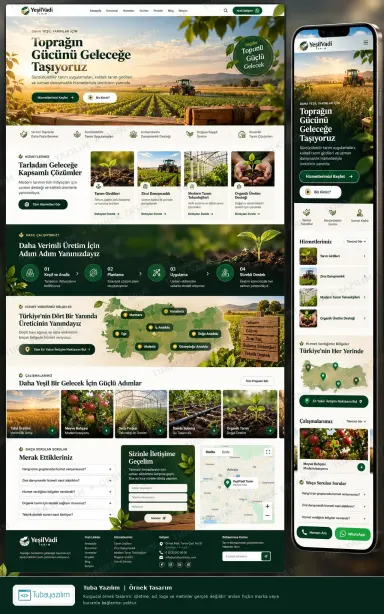
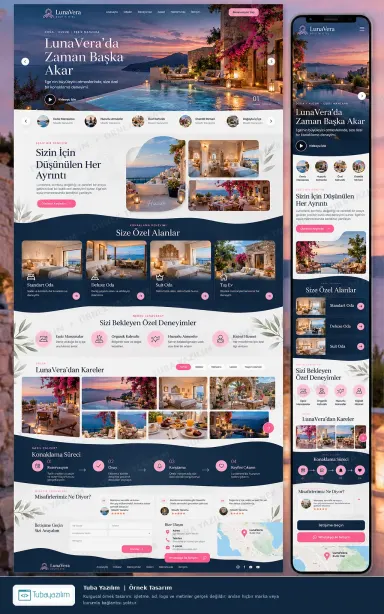
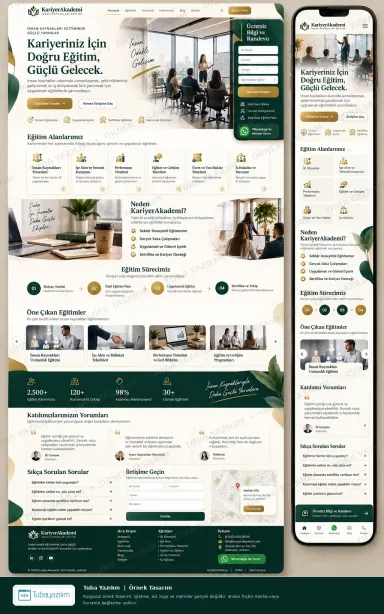
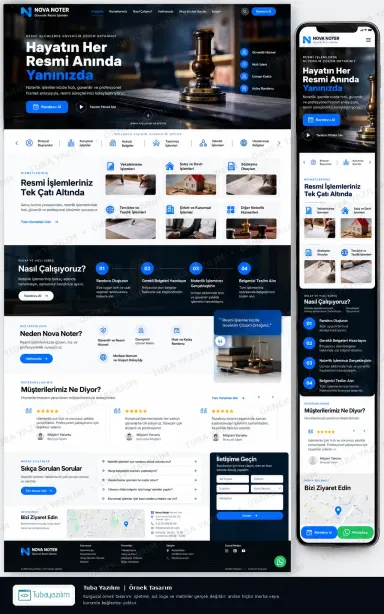
See a sample design for your own business
Browse fictional sample designs from hundreds of industries. Cannot see your type of business? Tell us what you do on WhatsApp and we will prepare a free sample design for you, with no obligation.