Technical SEO Checklist for a Business Website
Technical SEO is the groundwork that lets search engines reach, understand and show your pages. Use the table to see what to check and why, then the checklist to work through it page by page.
A technical SEO checklist for a business website covers crawlability, indexing, canonical URLs, redirects, sitemaps, page speed and Core Web Vitals, mobile usability, structured data, internal links, error pages and Search Console monitoring. Fix blockers that stop pages being found first, then improve speed and clarity.
Last updated:
What does technical SEO cover?
Technical SEO is the set of site-level conditions that let search engines crawl, index and interpret your pages correctly. It does not replace useful content, but weak foundations can hide good content from search.
The table below summarises the main areas, what each one means and the first thing to check. Work in the order shown, because a crawl or indexing blocker makes every later improvement irrelevant.
| Area | What it means | First check |
|---|---|---|
| Crawlability | Search bots can reach your pages | robots.txt, server errors |
| Indexing | Pages are allowed into the index | noindex tags, Search Console coverage |
| Canonicals | One preferred URL per page | Canonical tag on each page |
| Redirects | Old URLs lead to the right new ones | No chains, correct status codes |
| Sitemap | A list of the URLs you want found | Submitted and error-free |
| Speed | Pages load and respond quickly | LCP, INP and CLS |
| Mobile | Same content on phones | Real-device test |
| Structured data | Machine-readable page facts | Valid markup that matches the page |
| Internal links | Pages link to each other sensibly | No orphan pages |
How do you check crawlability and indexing?
Crawlability means a search bot can fetch your pages, and indexing means Google chooses to keep them. They are separate, and a page can be crawlable but still not indexed.
Robots.txt mainly manages crawler traffic. Google states that it is not a mechanism for keeping a page out of Google; a noindex directive or password protection does that, and a blocked URL can still appear without a description if other pages link to it. Check that robots.txt is not blocking important sections, particularly after a redesign, and that staging rules were not carried onto the live site.
Then open the page indexing report in Google Search Console and look at the reasons given for pages that are excluded. Each reason names what to fix.
What are canonicals and how should redirects be handled?
A canonical URL is the preferred version of a page when several addresses show similar content, such as with and without a trailing slash or with tracking parameters. Google treats the canonical tag as a strong signal, and redirects as the strongest.
Use one canonical method, give absolute URLs and point each page to itself unless a true duplicate exists. For moved pages, use a 301 redirect to send visitors and search engines to the new address; Google treats a 301 as a strong signal and a 302 as a weak one. Avoid chains where one redirect leads to another, and update internal links to point straight to the final URL.
After a site move or redesign, map every old URL to its closest new equivalent, not to the home page.
Do you need a sitemap?
A sitemap is a file listing the URLs you want search engines to find, and it helps discovery without making indexing certain. Google says small sites with roughly 500 pages or fewer that are well linked internally may not need one, while large or new sites with few external links benefit.
If you have one, include only canonical, indexable pages that return a normal success status. Leave out redirected, noindexed and error URLs. Submit it in Search Console and check for reported errors. Many content management systems generate a sitemap automatically, so confirm that the generated file is accurate rather than assuming it is.
What are the Core Web Vitals thresholds?
Core Web Vitals are three measures of real-user experience: loading, responsiveness and visual stability. According to web.dev, a page is good when it meets all three at the 75th percentile of visits, segmented across mobile and larger screens.
| Metric | Measures | Good threshold |
|---|---|---|
| Largest Contentful Paint (LCP) | Loading | 2.5 seconds or less |
| Interaction to Next Paint (INP) | Responsiveness | 200 milliseconds or less |
| Cumulative Layout Shift (CLS) | Visual stability | 0.1 or less |
Thresholds can be revised, so verify them on web.dev before reporting. The usual causes of poor scores are oversized images, heavy scripts, late-loading fonts and elements without reserved space. Speed is also a design decision, which is why we build pages light from the start rather than adding plugins later.
Which technical SEO items should you tick off?
This checklist turns the areas above into tasks you can complete and date. Work through it on the pages that matter most, usually the home page, service pages and the pages that bring enquiries, before the rest.
- The site is served over HTTPS and every HTTP address redirects to it.
- Robots.txt does not block important pages, scripts or styles.
- No important page carries an accidental noindex tag.
- Each page has one self-referencing canonical and a unique title and description.
- One version of the domain is used: with or without www, not both.
- Redirects use 301 for permanent moves and have no chains.
- The sitemap lists only indexable canonical URLs and is submitted.
- Mobile pages carry the same content, headings and markup as the large-screen version.
- Structured data is valid and describes what is visible on the page.
- Every page is reachable through at least one internal link, with descriptive anchor text.
- Missing pages return a real 404 status, not a normal page with an error message, and useful ones are redirected.
- Search Console and an analytics tool are installed and checked monthly.
How should 404 errors and Search Console be handled?
A 404 is the correct response for a page that no longer exists, and it is not an error to fix on every occasion. Google does not index URLs that return a 4xx status and gradually crawls them less often.
The problem cases are soft 404s, where a missing page returns a success code, and 404s that still receive links or visits. Redirect those to the closest relevant page, and fix internal links that point to dead addresses. Check Search Console monthly for new errors, indexing exclusions and Core Web Vitals reports, and keep a dated note of each fix.
How do mobile, structured data and internal links fit in?
Mobile, structured data and internal links make pages understandable to both people and search engines. Google uses the mobile version of a site for indexing and ranking, so content hidden or missing on phones is effectively missing.
For structured data, mark up only facts that appear on the page, such as organisation details, articles and frequently asked questions, and validate it before launch. For internal links, link related pages with descriptive wording so visitors and crawlers can follow your topics. If you want these done for you, see our SEO services or the website maintenance and support plans.
Frequently asked questions
How often should a technical SEO audit be done?
Run a full audit after a redesign, migration or major platform change, then review Search Console monthly and re-audit at least once a year. Smaller sites with few changes need less, but any new section, template or URL structure deserves a quick check for errors and blocked pages.
Is a sitemap required for every website?
No. Google says a small, well-linked site of roughly 500 pages or fewer may not need one, though it rarely hurts. A sitemap helps discovery on large or new sites with few links, but it does not ensure that pages will be crawled or indexed.
What is the difference between noindex and robots.txt?
Robots.txt manages which URLs crawlers may request, while noindex tells Google not to keep a page in results. Google states that robots.txt is not a way to keep a page out of search, and a blocked URL can still appear without a description.
Do Core Web Vitals ensure better rankings?
No. They measure user experience and are one consideration among many, and good scores do not promise any ranking. They still matter because slow, unstable pages lose visitors. Check the current thresholds on web.dev: at present good means LCP 2.5 seconds, INP 200 milliseconds and CLS 0.1 or better.
Can Tooba Web run a technical SEO audit?
Yes. Tooba Web audits crawling, indexing, speed, structured data and internal links remotely from Istanbul, then lists fixes in priority order. We have no office in the UAE and promise no ranking or traffic outcomes. Message us on WhatsApp at +90 216 393 10 07 to arrange access to Search Console.
Related pages
Sources
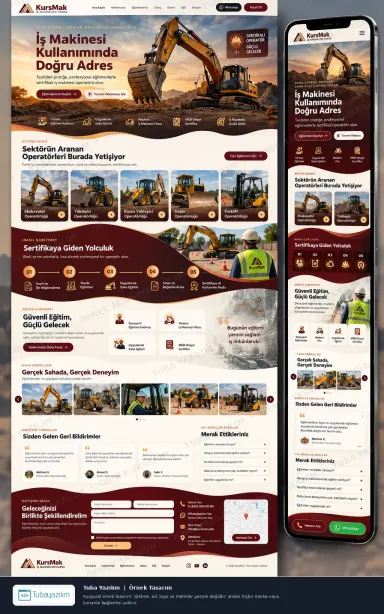
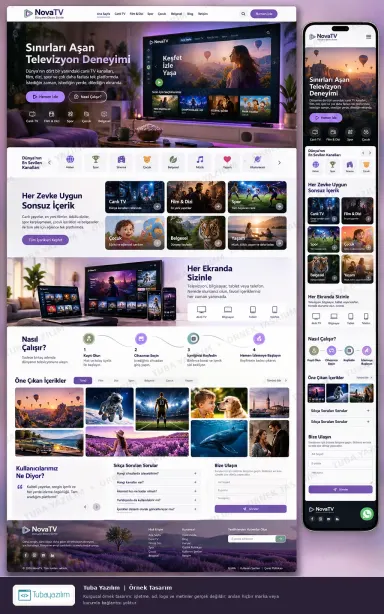
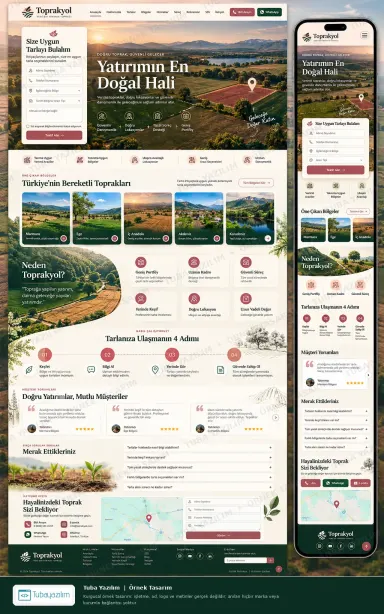
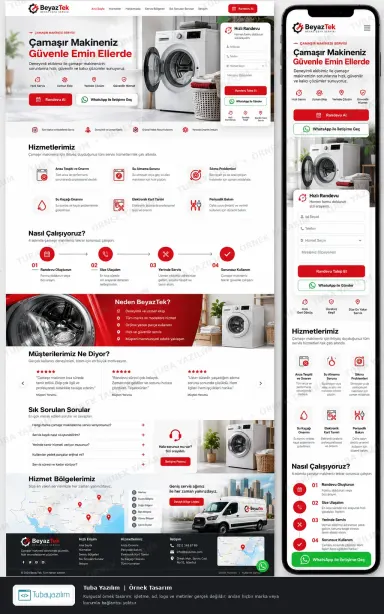
See a sample design for your own business
Browse fictional sample designs from hundreds of industries. Cannot see your type of business? Tell us what you do on WhatsApp and we will prepare a free sample design for you, with no obligation.