Website Design for CNC Turning and Milling Workshops in the UAE
Engineers judge a machine shop on capability and clarity. The website should state what the workshop can make and how a drawing becomes a part.
A website for a CNC machining company in the UAE should describe turning and milling capability in plain terms, list materials and tolerances the workshop can honestly offer, show real machined parts and let engineers send drawings for quotation through a form or WhatsApp. English and Arabic pages and fast mobile loading help.
Last updated:
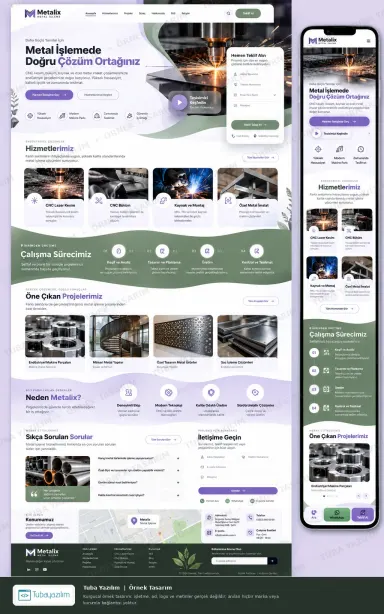
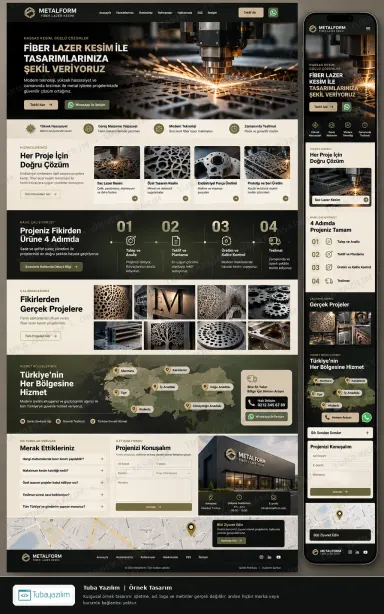
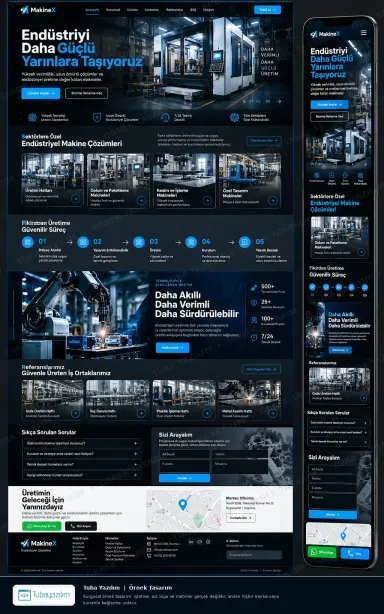
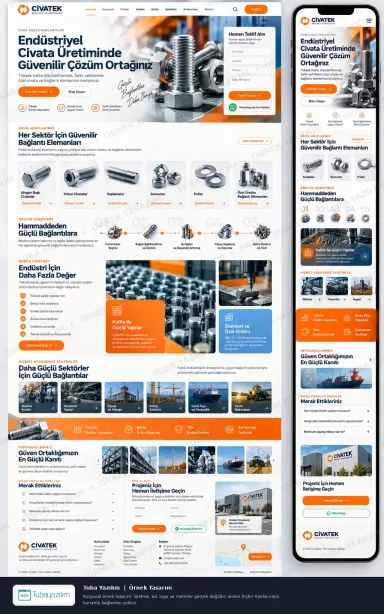
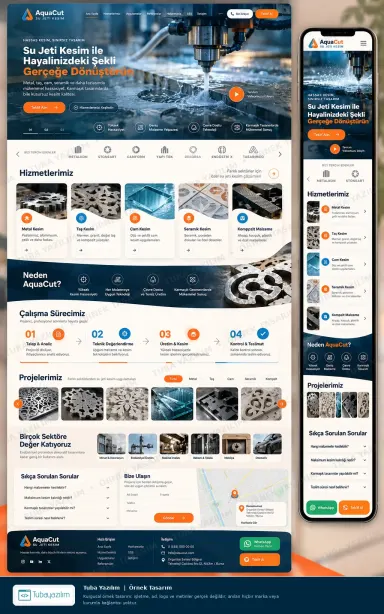
Sample website designs for CNC Machining Workshops
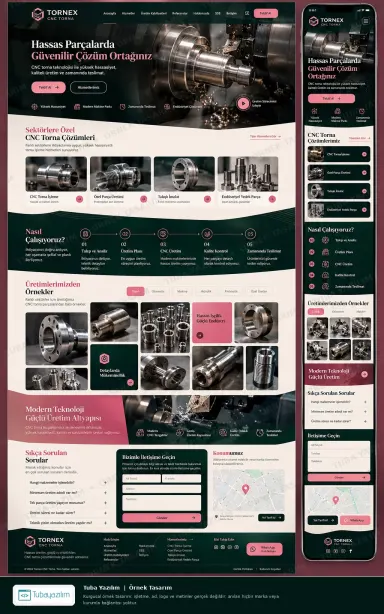
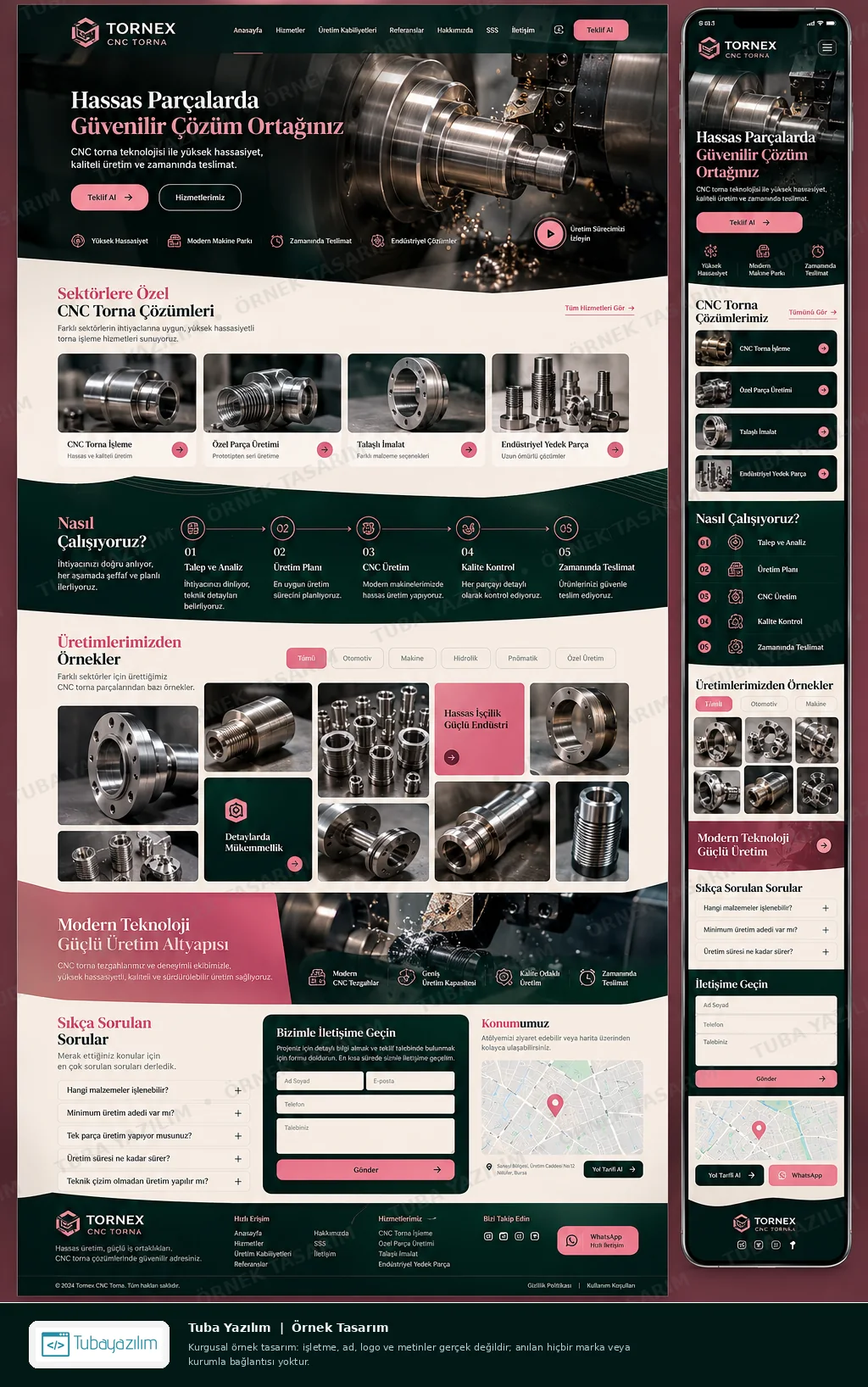
Dark green layout with pink accents, a lathe hero, service cards, process steps and a sample gallery 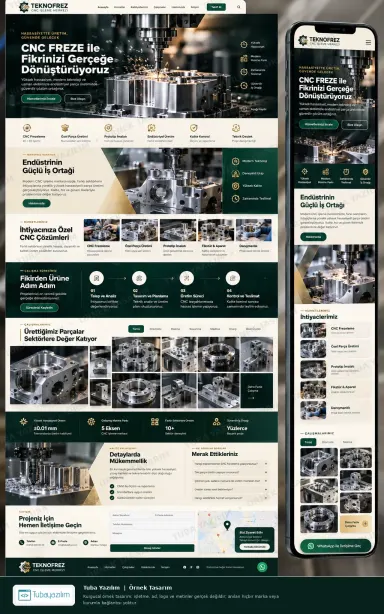
Green and gold layout with milling imagery, a tolerance and capability strip, tabbed part gallery
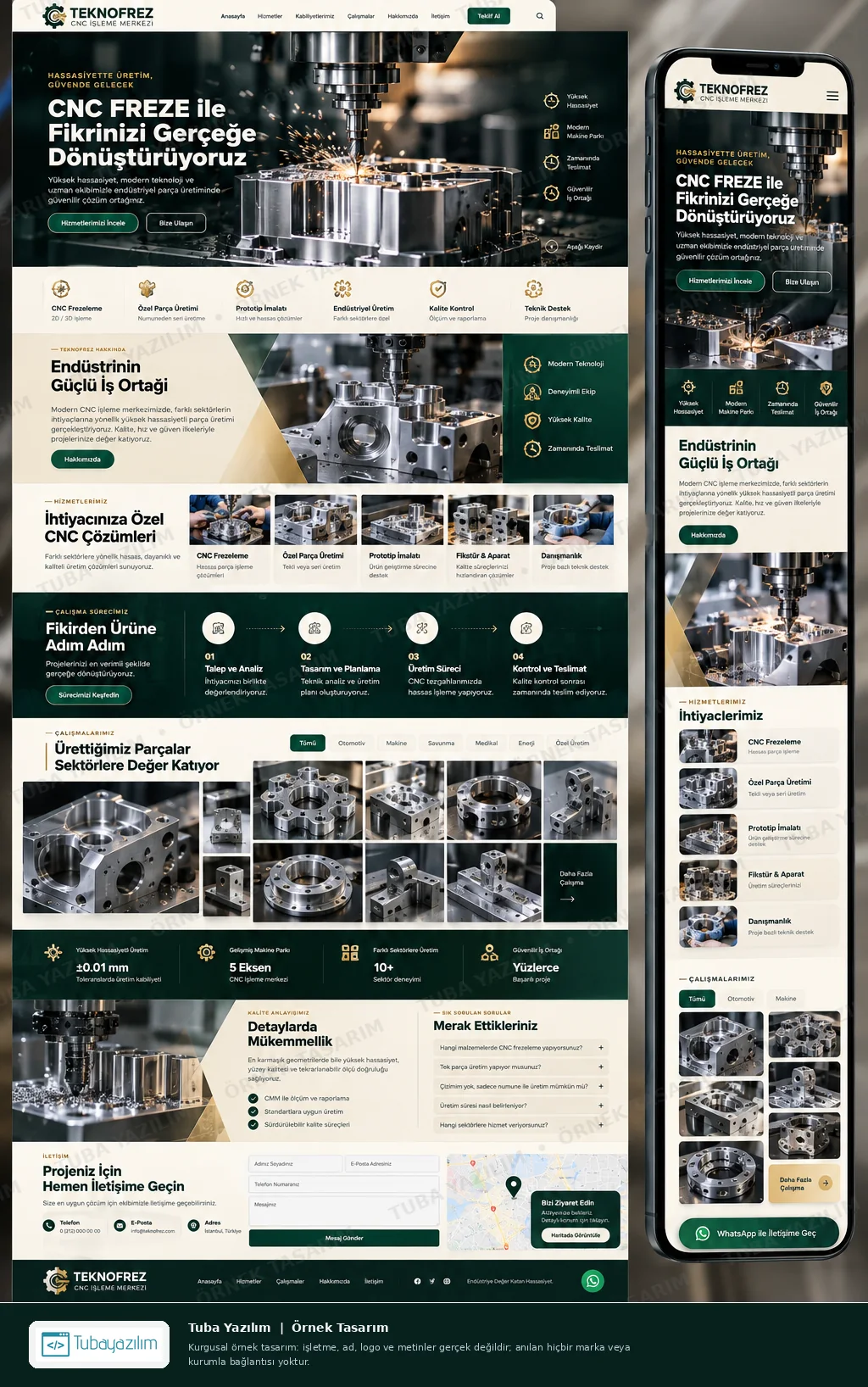
What should a CNC machining website include?
It should work as a capability statement that a buyer can act on. The samples pair strong close-ups of metal parts with a clear route to send a drawing.
- Capability pages for CNC turning, milling, drilling and finishing, each with the work envelope and axes described as the shop actually runs them
- A materials list covering steels, stainless, aluminium, brass and engineering plastics you machine
- Tolerance and surface finish wording that matches what inspection can verify
- A process section from drawing review and programming to machining, inspection and dispatch
- A gallery of real parts, tabbed by industry such as hydraulics, oil and gas support or tooling
- Equipment and inspection tools listed honestly, with machine names only if the owner wants them
- A drawing upload form accepting common file types, with a confidentiality note
- WhatsApp contact for urgent or small jobs
See custom software if you also want an internal job-tracking tool.
How do UAE buyers find and compare CNC machine shops?
Many begin with a search for a machining service near an industrial area, then check portfolios. Engineers and procurement staff want proof that the shop has made similar parts and can hold the tolerances required.
Photographs of finished, measured components carry weight, as do clear notes about material traceability and lead time. Buyers often send a drawing by WhatsApp for a first reaction before a formal quotation, so replying quickly is part of the impression.
Maps help for pickup and delivery planning, but only list a workshop address that really exists. Bilingual pages help when owners, buyers and machinists work in different languages.
What should a machining company prepare before the website is built?
The strongest sites rest on real evidence from the shop floor.
Gather well-lit photos of parts, machines and the team at work, with customer permission for any identifiable component. Write down materials, size limits and typical batch sizes, and decide what you will not take on. Collect inspection reports or certificates you hold and check wording with the relevant authority or a lawyer where claims relate to standards. Remove drawing details that belong to customers before photographing parts.
Frequently asked questions
Can engineers upload drawings on the website?
Yes. The request form can accept common drawing and model files, and the page can state size limits and a confidentiality note you write. Files arrive in your inbox or chat, and your team replies with a quotation. We do not display or calculate prices on the site.
Should turning and milling be separate pages?
Usually yes. Each process answers different searches and different customers, so separate pages with their own materials, part examples and request button work better than one generic machining page. Shared sections for quality and process keep the content consistent.
How do we show parts without revealing client work?
Photograph parts that are your own designs, parts released by customers, or neutral samples, and remove marks or details that identify a client. We lay out the gallery and captions, while you decide which parts are safe to publish.
Can you maintain the site afterwards?
Yes. We offer hosting, SSL and ongoing maintenance, so new parts, equipment or contact details can be added by us. Work is carried out remotely from Istanbul, with changes agreed over WhatsApp and billed by invoice.