Website Design for Import & Export Companies in the UAE
A trading company is judged on paperwork and reliability before a buyer ever speaks to anyone. These five fictional sample designs show how a trade website can lay that out.
A website for an import and export company in the UAE should explain what the firm trades, which routes and markets it covers, and how an enquiry becomes a shipment. It needs product-range pages, clear documentation and incoterm information, a structured quote form with a WhatsApp route, and English and Arabic content that a buyer can forward internally.
Last updated:
Sample website designs for Import & Export Companies
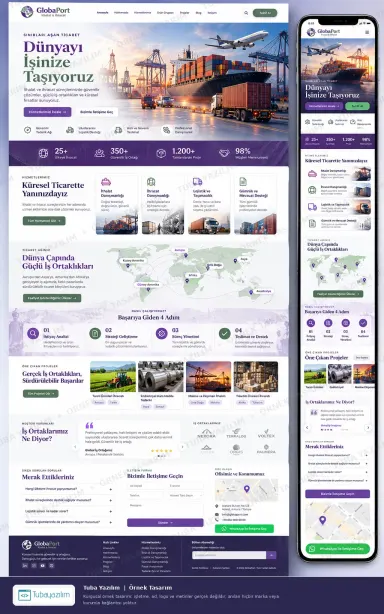
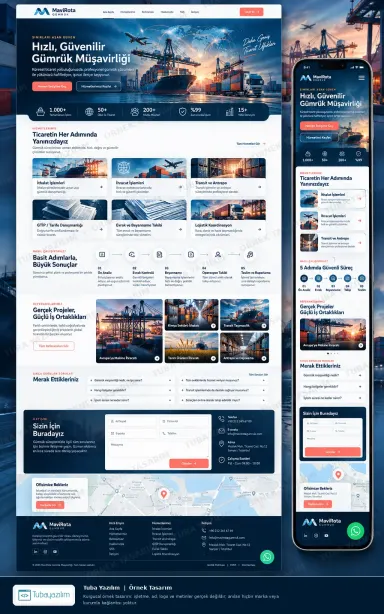
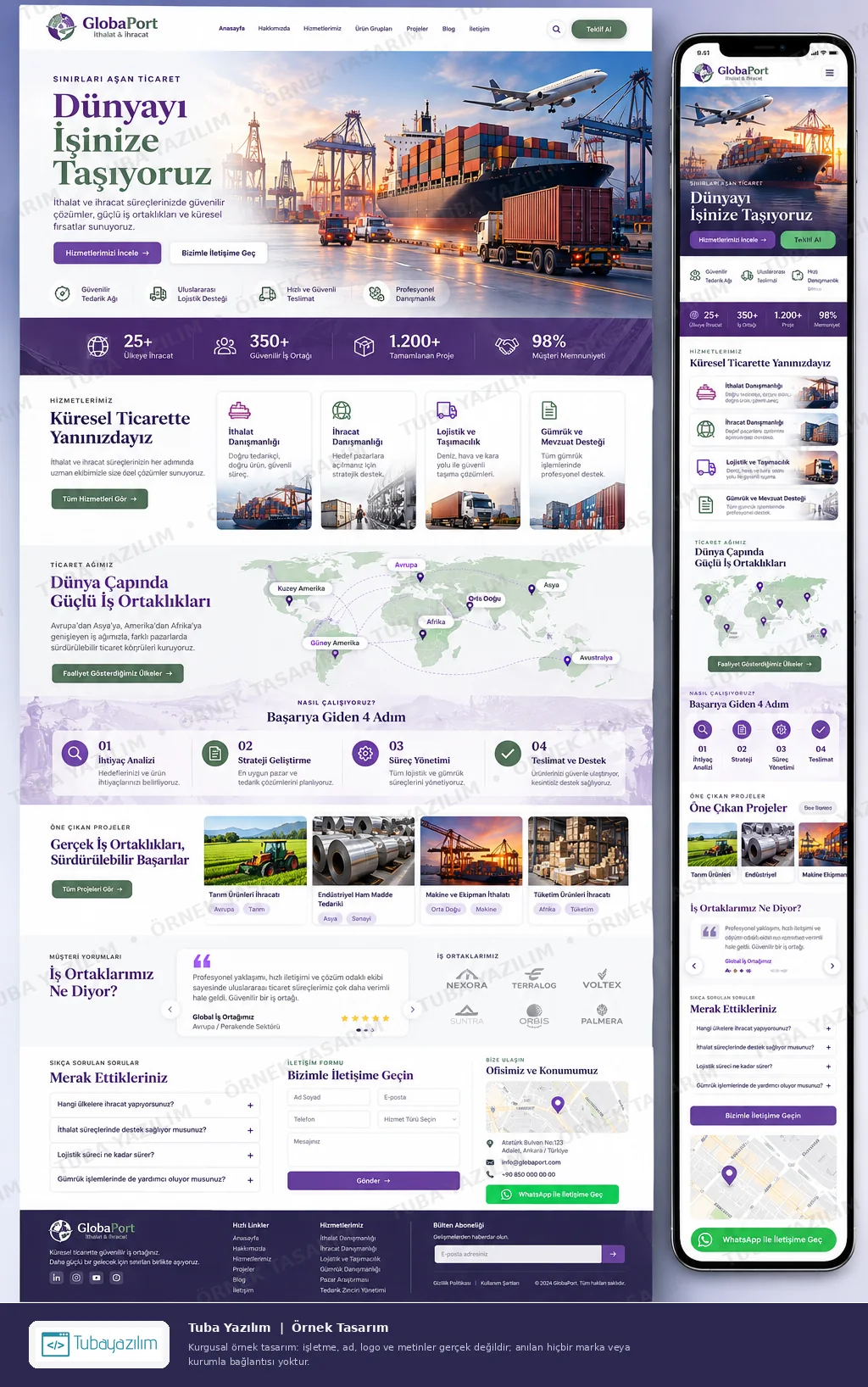
Violet-toned trade site with a freight-and-aircraft hero, service cards, world map and project strip. 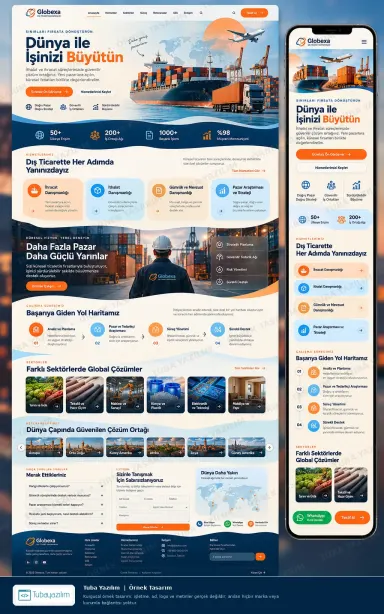
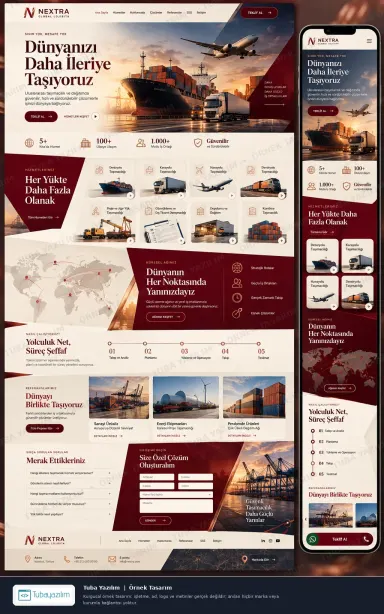
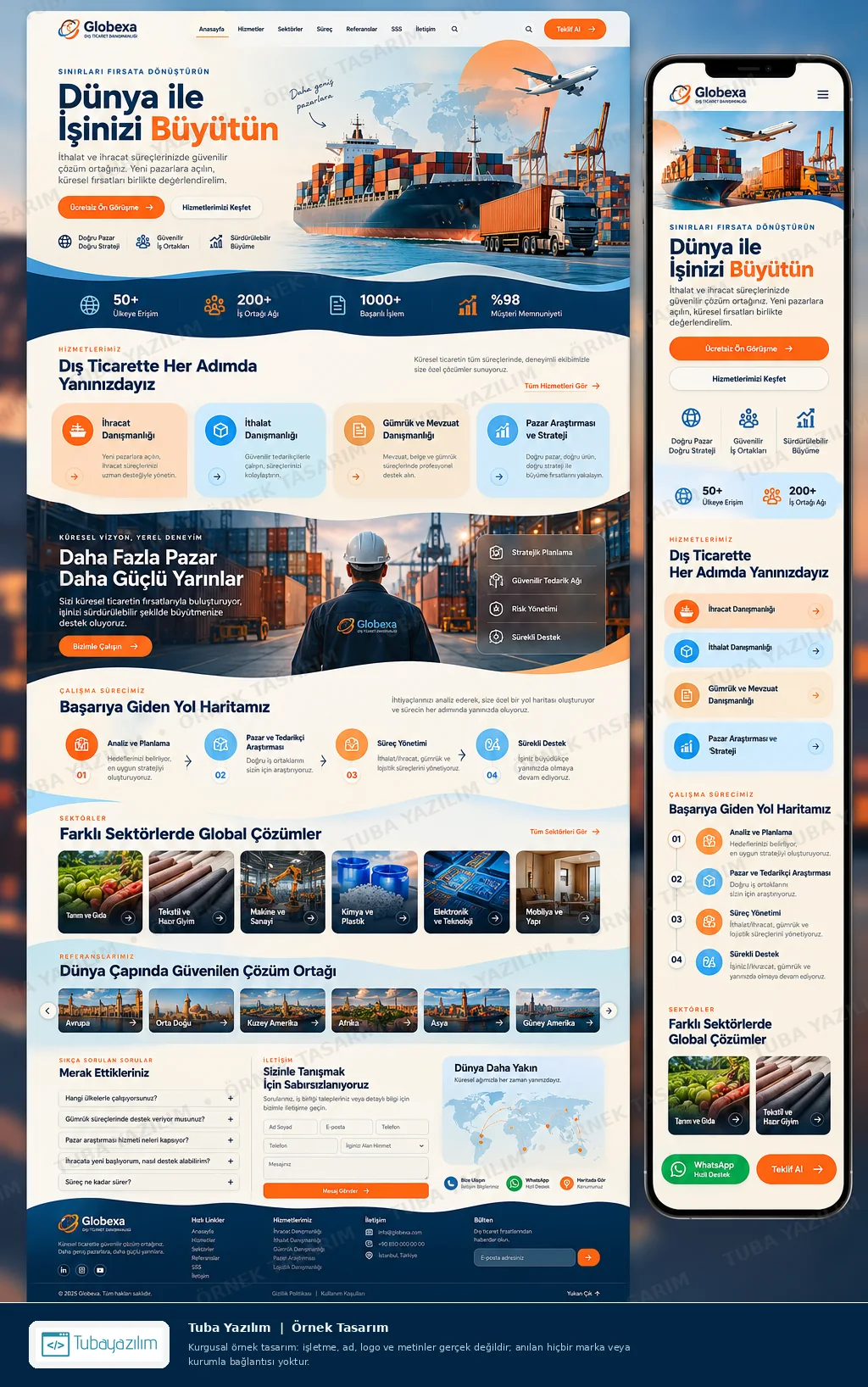
Blue and orange layout: container-ship hero, route-to-export steps, sector tiles and a global map. 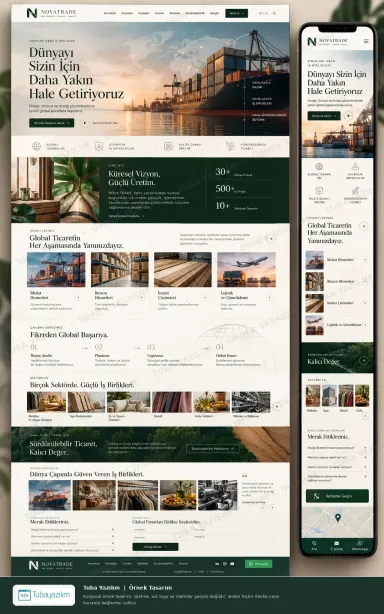
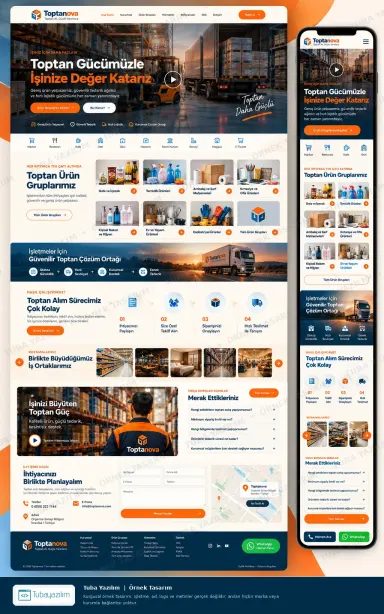
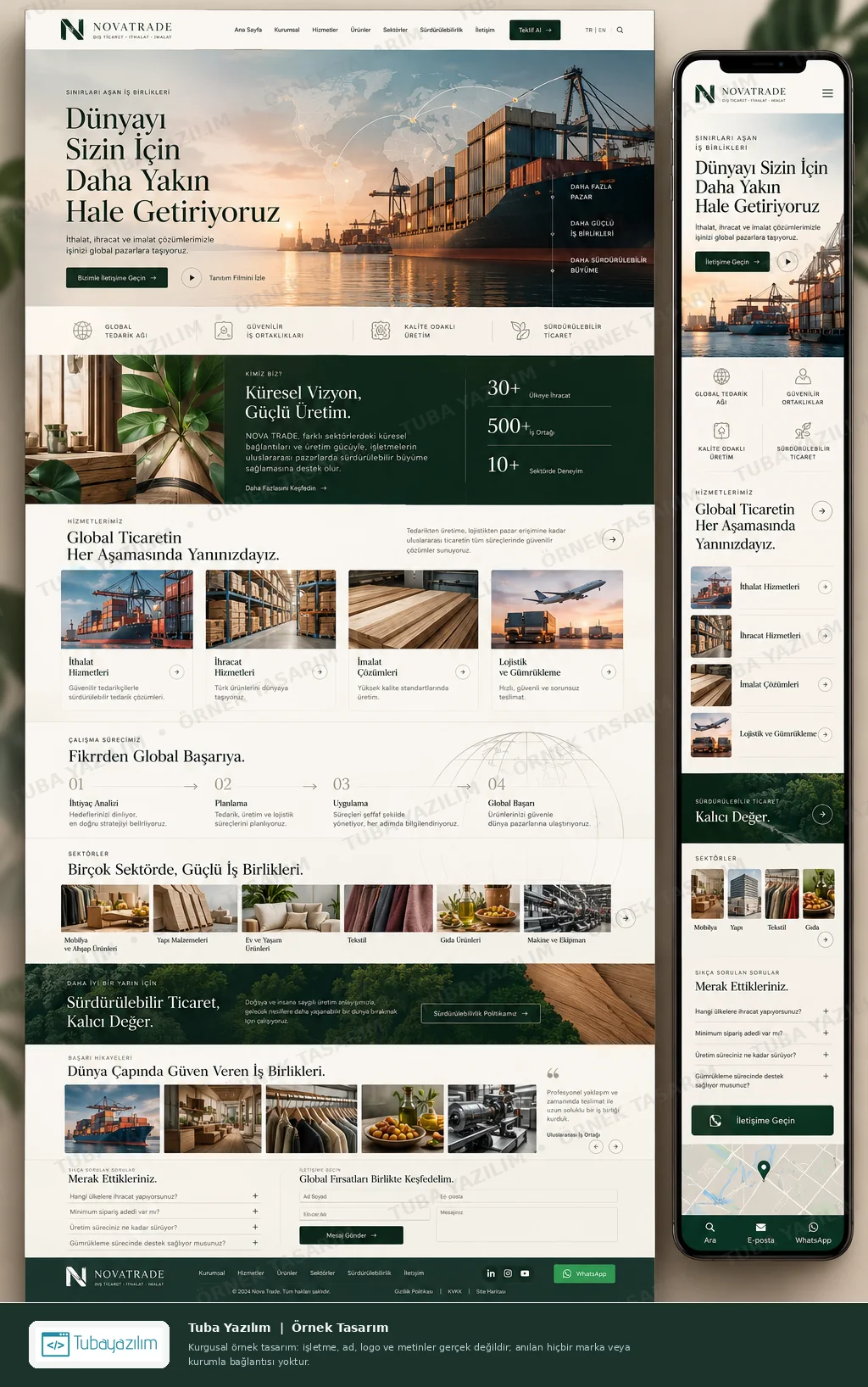
Dark green editorial design: port hero, commodity photos such as timber, and a numbered process. 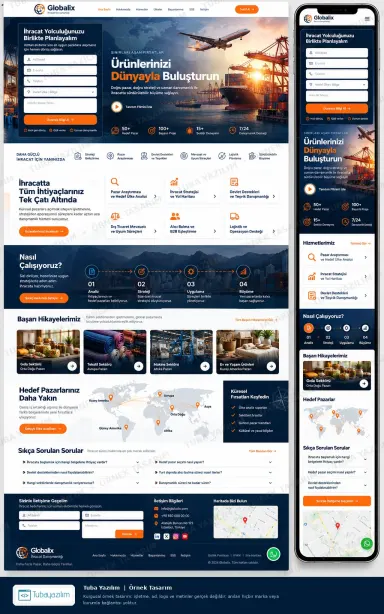
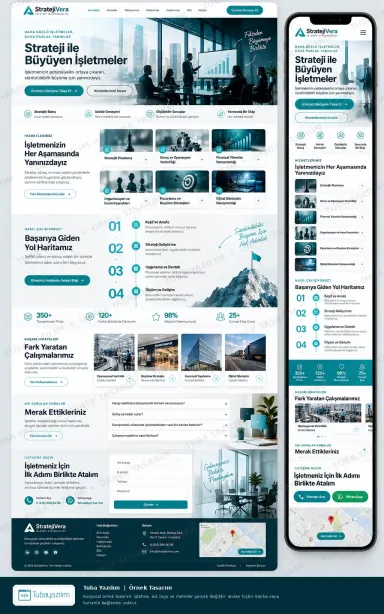
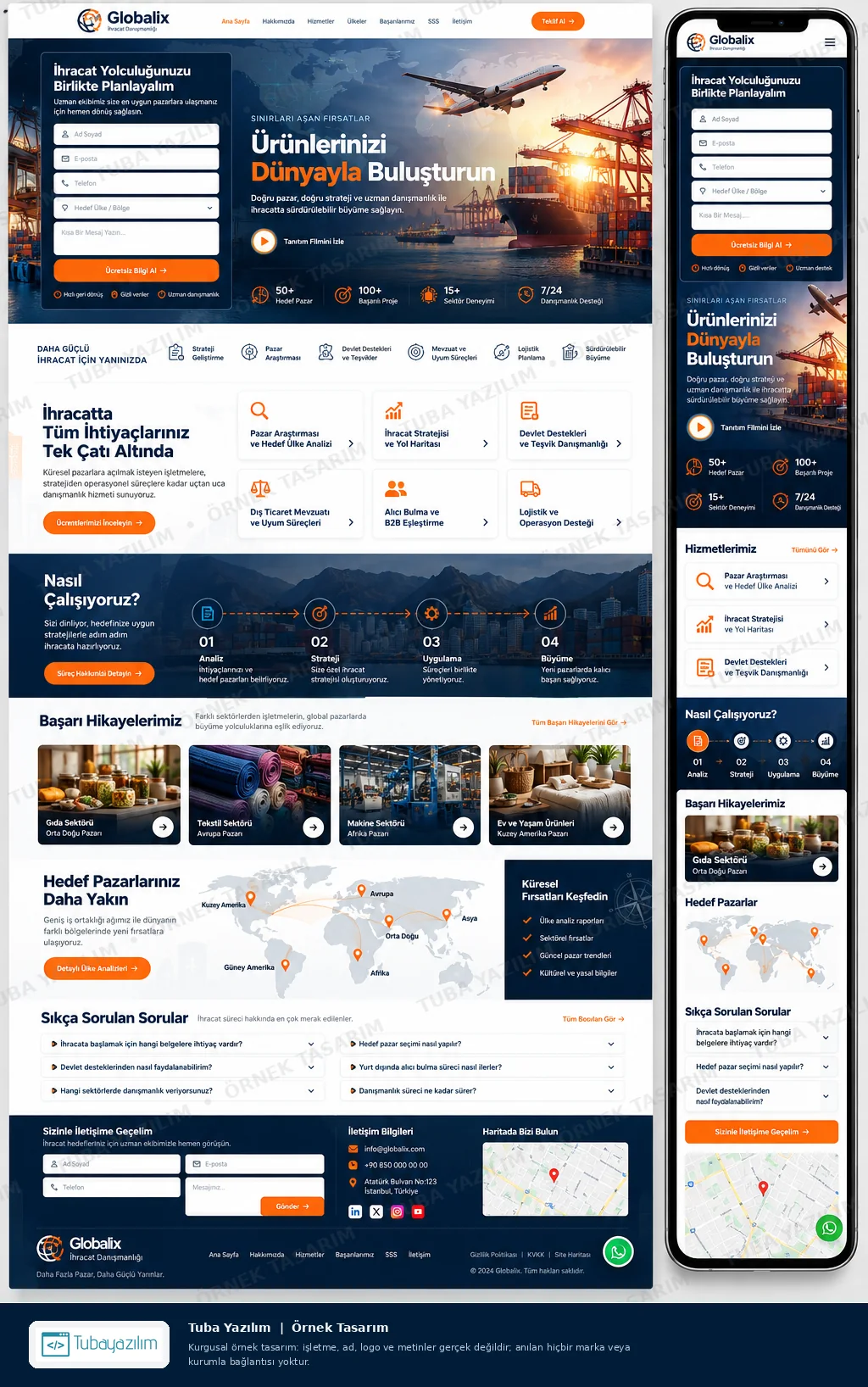
Navy design with an enquiry form beside the hero, service icons, success-story cards and a target-market map. 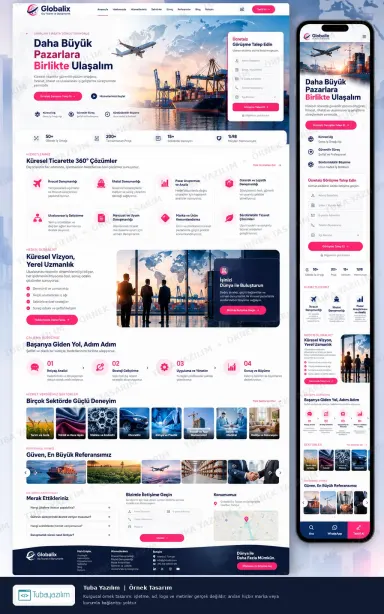
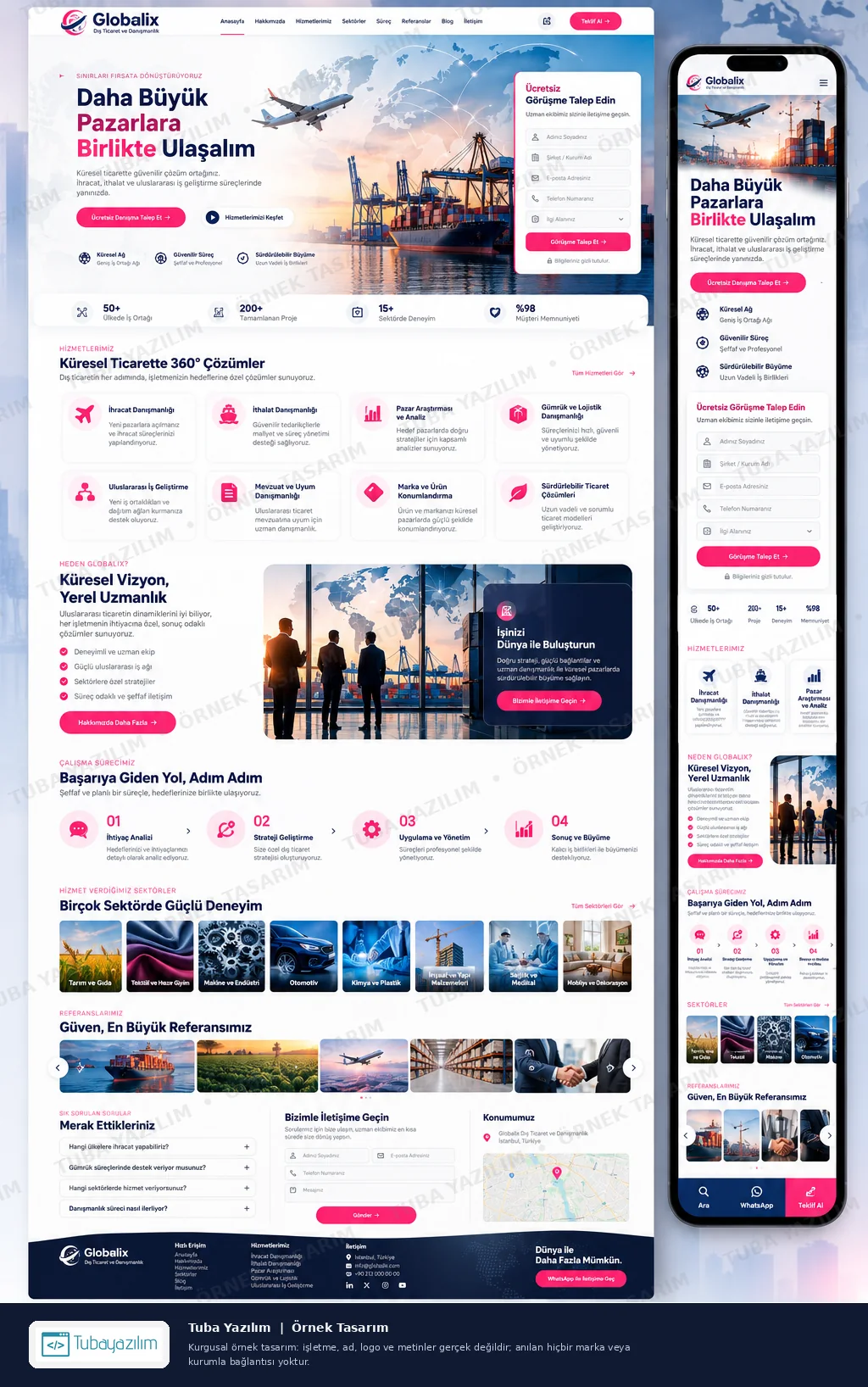
Pink and navy layout: rounded service grid, meeting photo, process steps and sector image mosaic.
What should an import and export company website include?
An import and export website should show buyers exactly what you move, where you move it and how a first conversation turns into a documented shipment. Think of it as a pre-qualification page for a procurement officer.
- Product or commodity pages, each with specifications, packaging formats and minimum order notes written as text
- A trade-lanes page naming origin and destination countries, ports and the transport modes you work with
- A plain explanation of the process: enquiry, sample or specification, quotation, contract, shipment, documents
- A documents section listing what you can supply, such as commercial invoice, packing list and certificates of origin
- A structured quote request form that asks for product, quantity, destination and incoterm preference
- A WhatsApp button that opens a chat pre-filled with the product category
- Company registration details and licence information shown in the footer
- A downloadable English and Arabic company profile for buyers who need to circulate it
Where you are a consultancy rather than a trader, replace product pages with service pages for market research, sourcing support and customs guidance.
How do buyers find and vet an import or export partner in the UAE?
Buyers usually search for the product plus a route, then check whether the company looks real before sending a message. Trade is relationship-driven in the Gulf, so a website works as the first screening step before a call or a WhatsApp conversation.
Search queries tend to be specific: a commodity, a destination, a request for a supplier or a clearing partner. Pages that name the product, the lane and the documents provided give search engines and AI assistants something precise to quote. A single generic services page rarely does.
A buyer will then look for a registered company name, a phone or WhatsApp number, and clear English with an Arabic option. Quick replies on WhatsApp are normal, so the form and the chat button should both be visible without scrolling. Photographs of real warehouses, packaging and loading, supplied by you, are worth far more than stock containers.
What should you prepare before a trade website is designed?
Prepare facts, not slogans: the product list, the markets you serve and the paperwork you can genuinely provide. A trade website that overstates capability creates problems at the first due-diligence call.
Gather your trade licence and registration details, the list of products with specifications, and any certificates you actually hold. Decide which routes and incoterms you quote, and who answers enquiries in English and Arabic.
Customs, import permits and product-specific controls are regulated by the relevant authorities, so keep claims about clearance general and confirm requirements with the relevant authority or a lawyer. We work remotely from Istanbul and have no UAE office, so collecting these materials by WhatsApp and shared folders is part of the first week.
Frequently asked questions
Can the website handle quotation requests for different products?
Yes. We design a quote form that changes its questions by product category, for example asking about packaging for food and about dimensions for building materials. Submissions can reach an email inbox and a WhatsApp chat so nothing waits in a form queue. We do not build online shops, so there is no checkout.
Should an import-export website be in Arabic as well as English?
Usually yes, because decision makers in the region may read one language and forward pages in the other. We build English and Arabic versions with right-to-left layout where needed, and recommend you supply or approve the Arabic wording, particularly for product names and terms of trade.
Can the site show shipment tracking?
A simple tracking or status page is possible as custom software if your operations system can feed it, but it is a separate project from the marketing website. For most traders, a clear process page and fast WhatsApp contact matter more at launch, and tracking can be added later.
How does the remote design process work?
Tooba Web is a brand of Tuba Yazlım in Istanbul and works entirely remotely. We agree structure and content over WhatsApp and video calls, share design drafts for review, then build, test and launch. Istanbul is one hour behind the UAE, so calls fit normal business hours.