Website Design for Racking and Storage System Companies in the UAE
Warehouse managers want to know which rack suits their pallets, how it will be installed and who surveys the site. This sample design shows a rack-led layout with clear quote and survey routes.
A website for a warehouse racking and storage systems company in the UAE should show each rack type with its typical use, explain how layout planning, supply and installation work, and let warehouse managers request a site survey or quote by form or WhatsApp. English and Arabic pages and photographs of real installations help buyers trust the company.
Last updated:
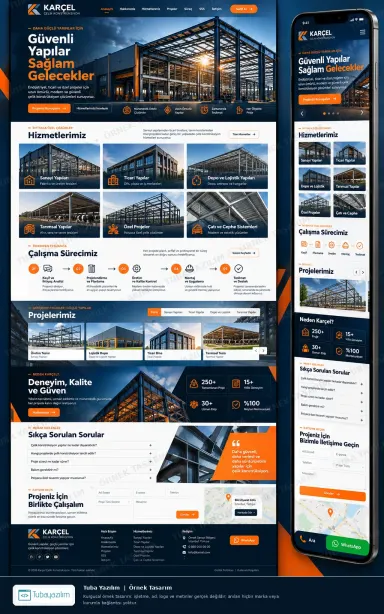
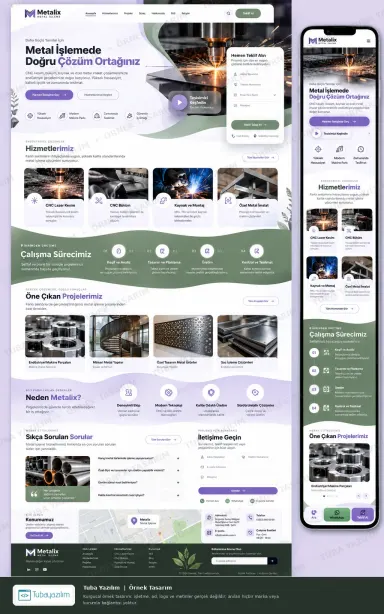
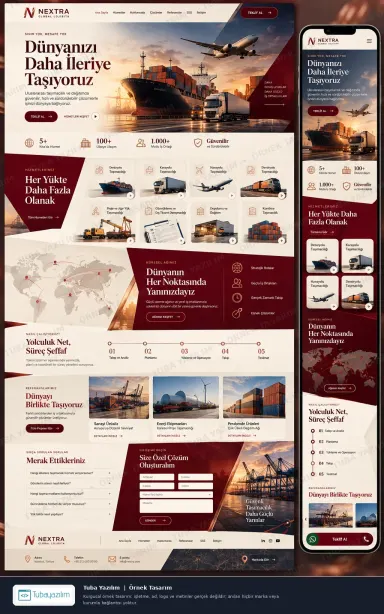
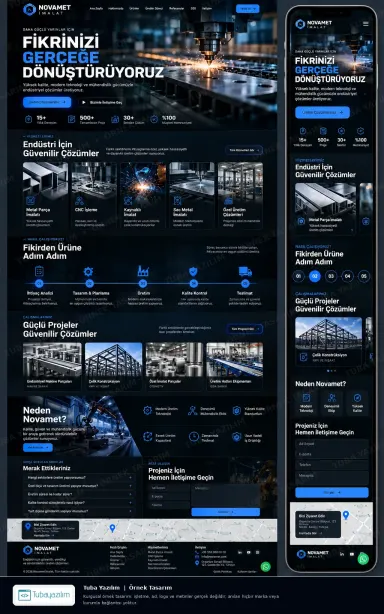
Sample website design for Warehouse Racking & Storage Systems
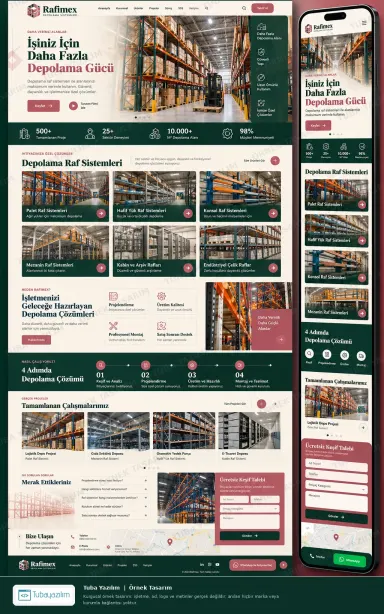
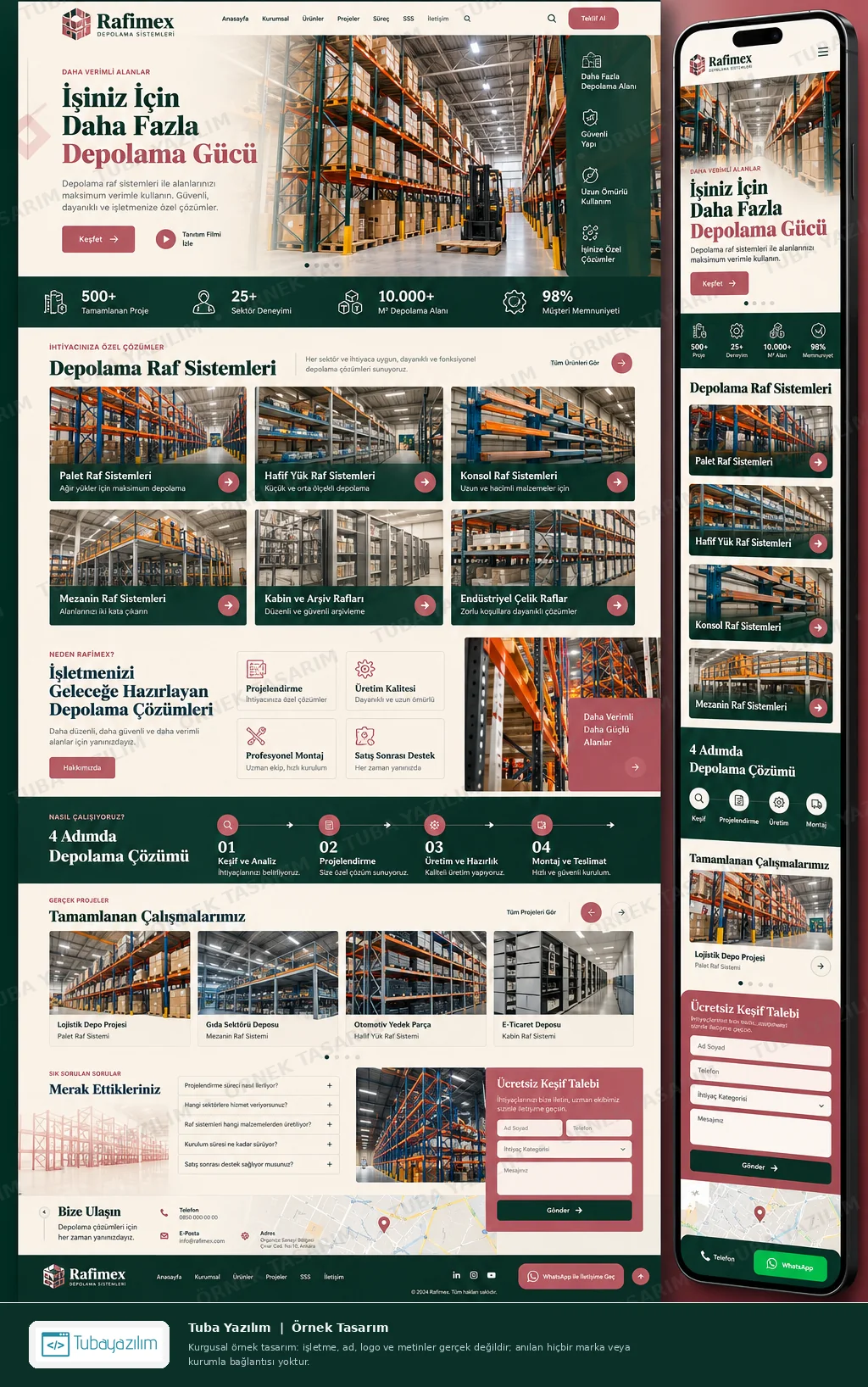
Deep green and rose layout with a warehouse hero, rack type cards, four-step process and a quote form.
What should a racking and storage systems website include?
A racking supplier's website should help a warehouse manager match a rack type to their goods and then start a survey. It should read like a planning conversation rather than a product list.
- Pages for each system: pallet racking, cantilever, shelving, mezzanine floors and drive-in or similar high-density options
- A plain explanation of which system suits pallets, long items, small parts or cold-store use
- A description of the planning stage: site visit, measurements, layout drawing and load discussion
- Photographs of completed installations in real warehouses, with the type of racking named
- An installation and safety page covering inspection and training topics in general terms
- An enquiry form that asks for floor area, ceiling height, pallet size and weight, and forklift type
- A WhatsApp button for quick questions and photos of the site
- A page about maintenance, extensions and reconfiguration of existing racking
The sample design leads with a deep warehouse aisle and follows it with category tiles, a pattern warehouse buyers recognise at once.
How do UAE logistics and warehouse buyers find racking suppliers?
Searches usually come from three groups: a new warehouse fitting out, an existing facility running short of space, and a company that has bought used racking and needs help with it. Each types something slightly different, from "pallet racking supplier" to "mezzanine floor for warehouse".
Free zones and industrial areas house many such buyers, and they tend to ask for a visit before a quotation. A site that explains the survey step, and what the visitor should have ready, lowers the barrier to asking. Photos of real installations convey scale in a way specifications cannot.
Many facility managers contact suppliers by WhatsApp with a few photos and a rough size, so the contact area should invite that. English is the common working language, with Arabic useful for owners and local decision-makers. Because this is a project business, technical SEO and well-written system pages usually matter more than a map pin.
What should a racking company prepare before the website is built?
Bring photographs of completed installations, with permission from the site owner to show them, and a list of the systems you supply or fabricate. Prepare an accurate description of your survey and installation process, including who carries it out.
Load capacity and structural safety are serious topics. Do not publish figures or compliance claims unless you can support them with documents, and confirm any standards or inspection wording with the relevant authority or a qualified engineer. General guidance on safe use is helpful, but it should not replace a site-specific assessment.
It also helps to write the questions you ask at first contact, such as pallet dimensions and aisle width. Putting them into the form saves a round of messages.
Frequently asked questions
Can the website explain different rack types?
Yes. Each system, such as pallet racking, cantilever, shelving or mezzanine floors, can have its own page describing typical use, what it stores and what the planning steps are. Your engineers supply the technical content, and we structure it so a warehouse manager can compare options quickly.
How would a site survey request work?
A form asks for location, warehouse dimensions, pallet size and weight, and preferred timing, and a WhatsApp button lets the visitor send photos. Requests go to your team, who arrange the visit. The site only collects the request; it does not schedule or promise a date automatically.
Do we need to show load capacities?
Only if you can support them with documentation. Many suppliers prefer to explain that capacity depends on the design and assessment of each installation. We can word the pages accordingly, and you should confirm technical or safety statements with a qualified engineer or the relevant authority.
Is the process remote?
Yes. Tooba Web works remotely from Istanbul, which is one hour behind the UAE, and discusses structure and design with you over WhatsApp and calls. You provide installation photos and system descriptions, and we handle the design, build, hosting and launch of the site.