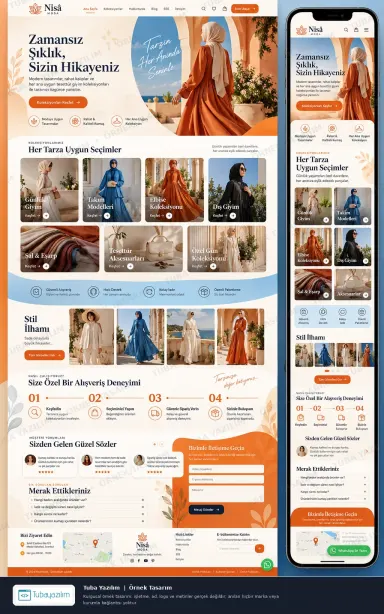
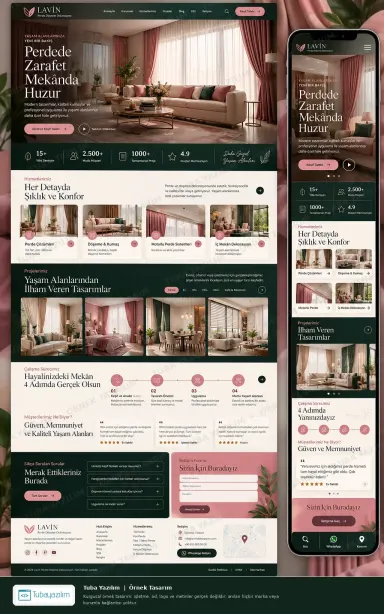
Website Design for Tailors and Embroidery Studios in the UAE
Tailoring and embroidery are about fabric, fit and detail, so the site must show close-up work and explain how an order moves from idea to finished piece.
A website for a tailor or embroidery studio in the UAE should show finished work in sharp close-ups, explain the order process from measurement to delivery, list the garments and items handled, and offer a WhatsApp route for sending designs. Bilingual English and Arabic text and clear turnaround information help customers decide.
Last updated:
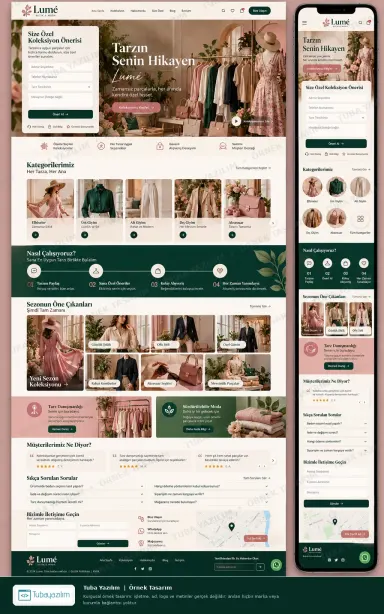
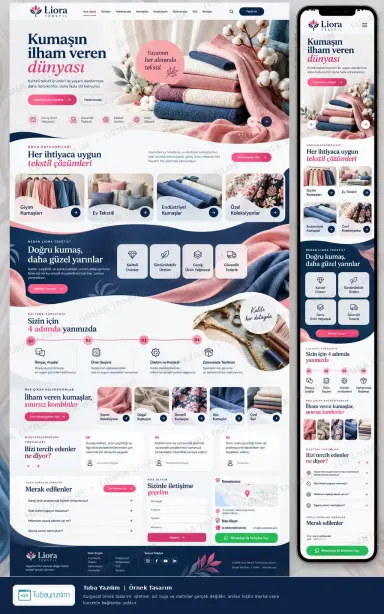
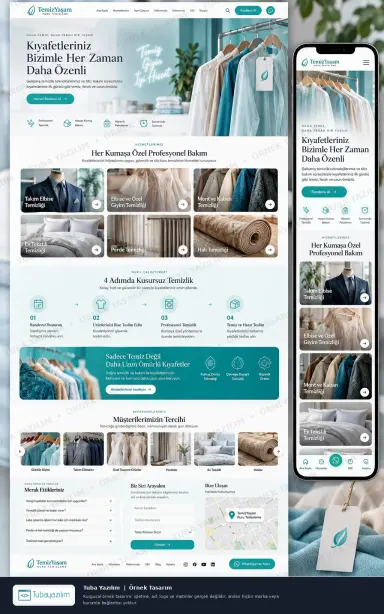
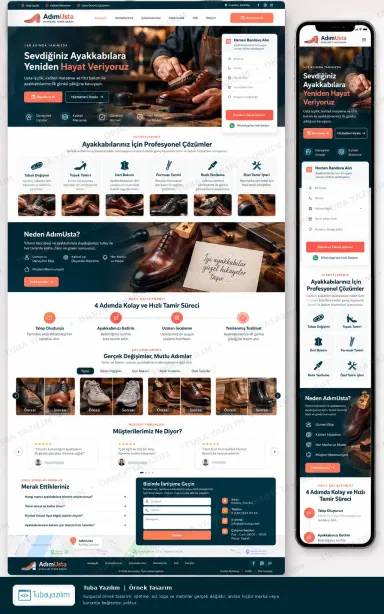
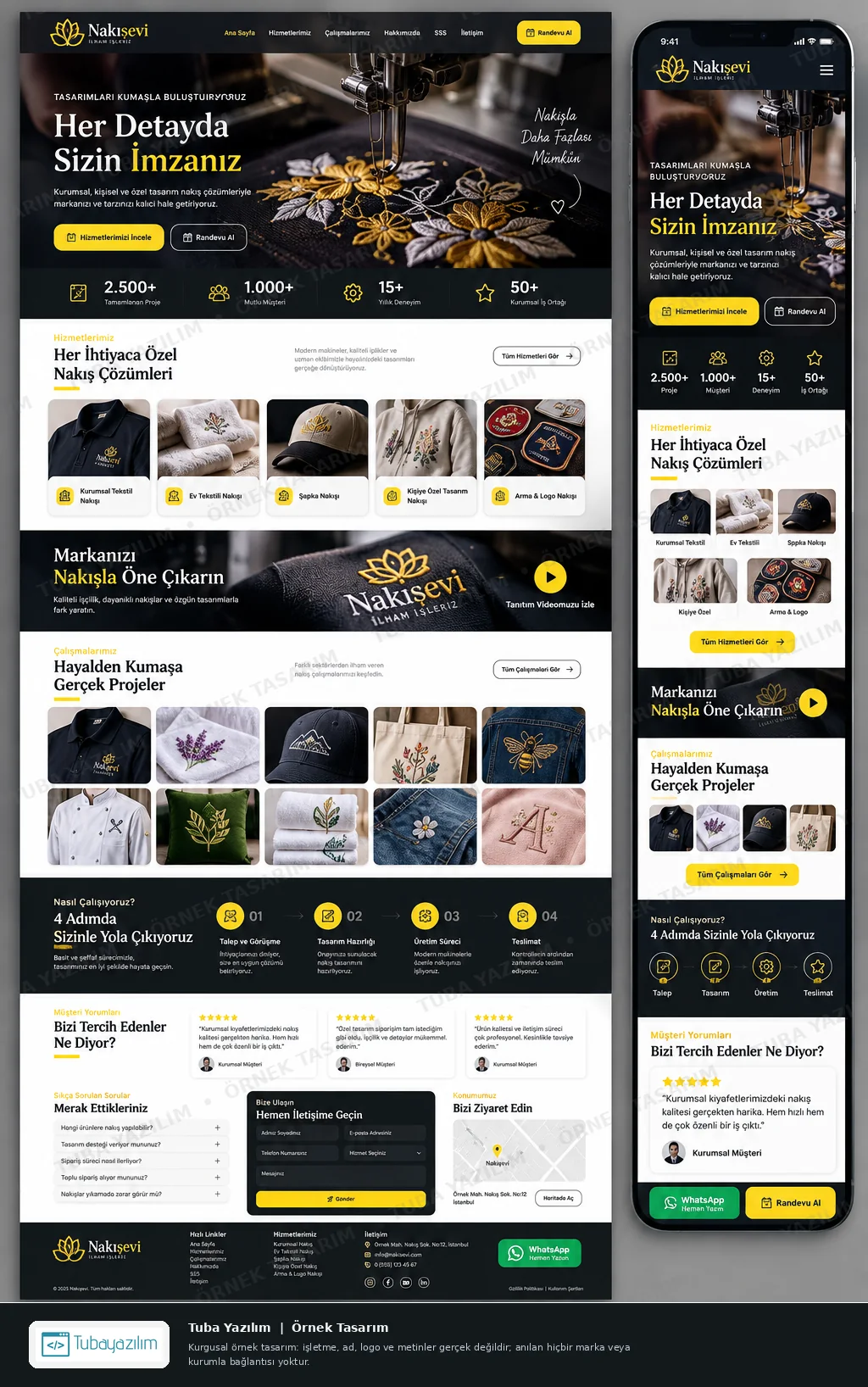
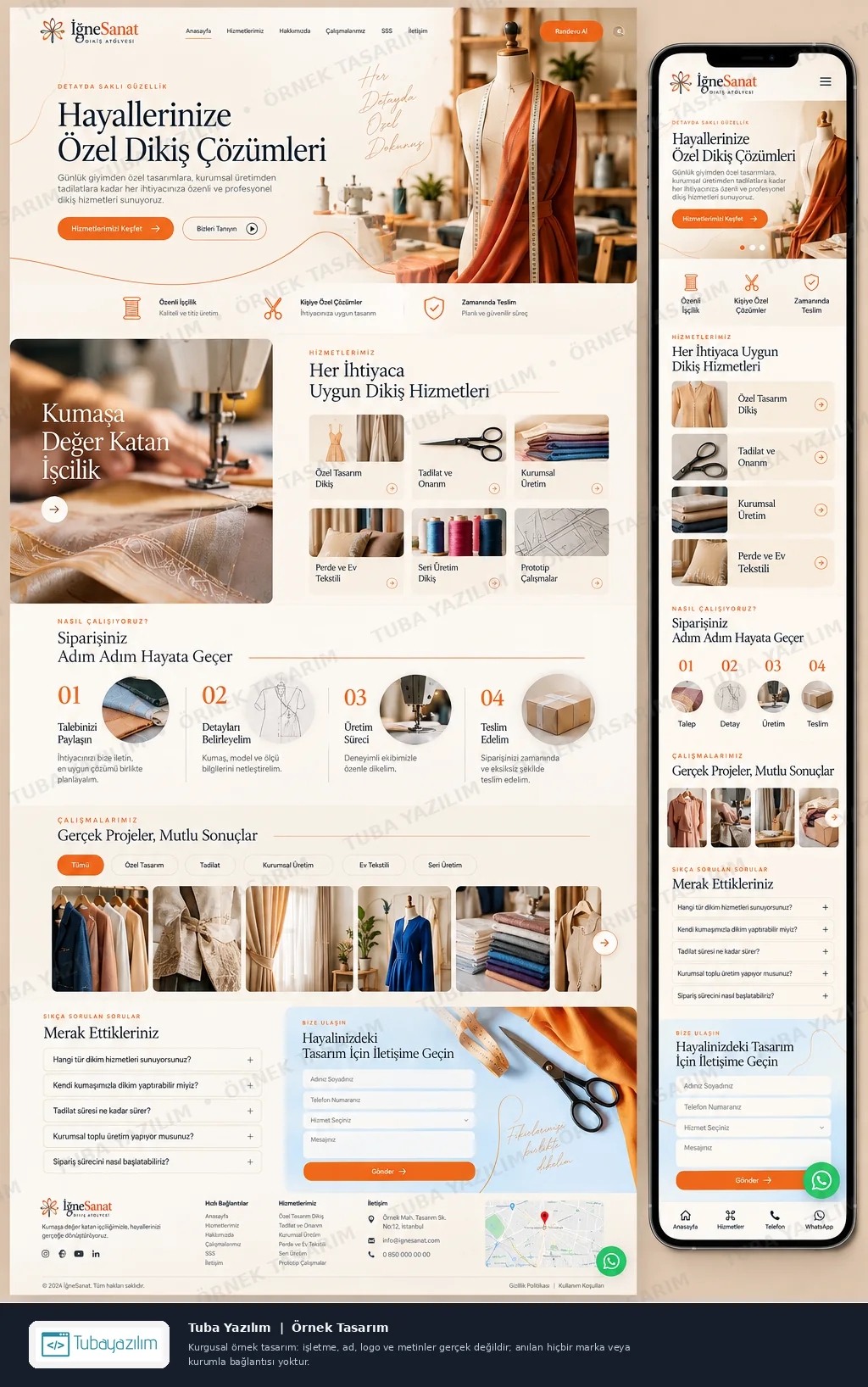
Sample website designs for Tailors & Embroidery Workshops
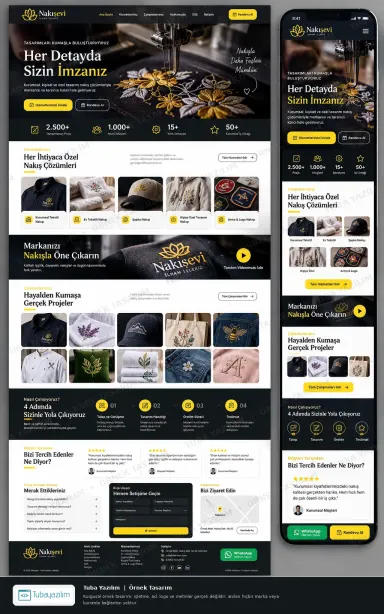
Black and yellow sample with embroidery machine hero, product tiles, logo-on-fabric banner 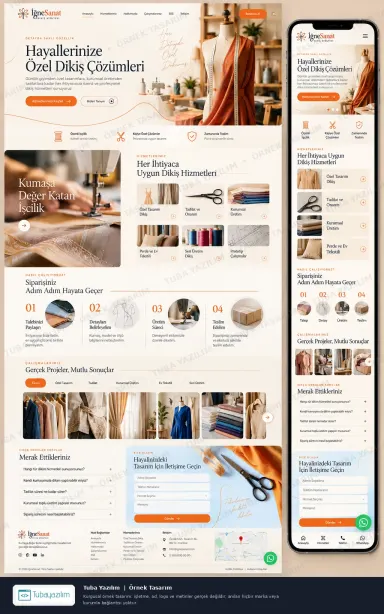
Warm cream sample with sewing hero, alteration services, scissors and fabric imagery, order steps
What should a tailor or embroidery website include?
The site should let customers see the quality of stitching and understand how to order. Close-up photography matters more than long descriptions.
- Service pages for alterations, made-to-measure garments, curtains and soft furnishings, and uniform sewing
- Embroidery pages for logos on uniforms, caps, towels and gifts, with file requirements explained simply
- A gallery with sharp close-ups of stitching, fabric and finished garments
- An order process showing consultation, measurement or artwork approval, production and collection
- A way to upload or send a logo or reference image by WhatsApp
- A corporate page for companies ordering uniforms in quantity
- Workshop address and appointment details for fittings, where a real workshop exists
- A fabric and thread information section in your own words
Photograph close and in natural light; stitching, hems and thread colour are what customers judge first.
How do customers in the UAE find a tailor or embroiderer?
Individuals look for a tailor near them for an alteration or a special outfit, while businesses search for embroidered uniforms or logo items. Both groups scan photos and then message to ask about timing.
Sending a reference photo or a logo file by chat is the normal first step, which makes a WhatsApp route central. Customers also want to know whether you handle small runs or large orders, so state that clearly.
Occasions such as weddings and school terms create busy periods, and people look for a workshop that explains its schedule honestly. Bilingual English and Arabic pages broaden the audience, and consistent contact details across site and listings help people trust the business.
Schools, restaurants, clinics and sports clubs order uniforms repeatedly, so a short business page explaining minimum runs and artwork approval attracts those buyers.
What should a tailor or embroiderer prepare for the website?
Photograph finished pieces in good light, close enough to show the stitch quality, and shoot your workspace and machines. Prepare a list of what you make and any minimum quantities for embroidery.
Customers' logos and designs may be protected by others' rights, so decide how you will handle artwork supplied by clients. Confirm any trading or intellectual-property questions with the relevant authority or a lawyer.
- Service and garment list
- Artwork and file guidelines
- Photos of finished work with permission
- Turnaround and alteration policies
Write down your usual timeline from artwork approval to collection, so the site sets realistic expectations for both occasion wear and bulk orders.
Frequently asked questions
Should embroidery and tailoring be on one site?
Yes, if one business offers both. We would give each its own pages and gallery so each can be found separately, while the order and contact routes stay shared and simple. Customers often have a design idea but not a file, so explain what you can work from.
Can customers send a logo through the site?
Yes. We can add a simple form and a WhatsApp prompt asking for a logo in common formats. You can then confirm feasibility and requirements by chat. Seasonal rushes are easier to manage with a clear request route.
Do I need online ordering?
We do not build online shops. For tailoring and embroidery, enquiry by WhatsApp or form usually fits better anyway, because each order needs measurements or artwork discussion. Each product type then ranks and reads on its own.
How does the project work from Istanbul?
We work remotely, one hour behind UAE time. You send photos and details by WhatsApp, we share drafts and refine them with you, and then launch. We have no UAE office; invoices are paid by bank transfer. Tailors and studios of any size can work this way, whether one workshop or several.