Website Design for Fabric Shops and Textile Traders in the UAE
Fabric is judged by touch, so a website has to compensate with close photography and clear descriptions. The sample design is built around fabric families and a simple request route.
A website for a fabric shop or textile trader in the UAE should present fabric families with close, accurate photography, explain widths, composition and typical uses, and let customers request samples or quantities by WhatsApp. It needs separate routes for tailors, designers and trade buyers, and bilingual English and Arabic content.
Last updated:
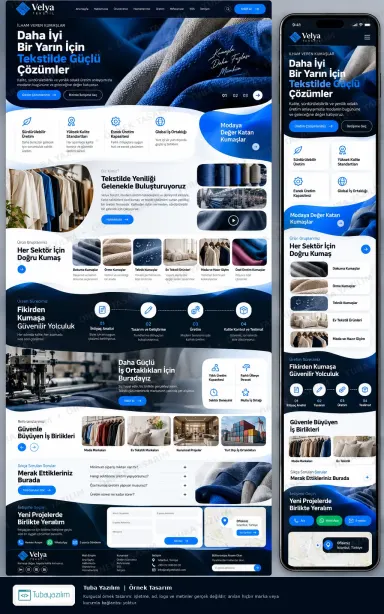
Sample website design for Fabric Shops & Textile Traders
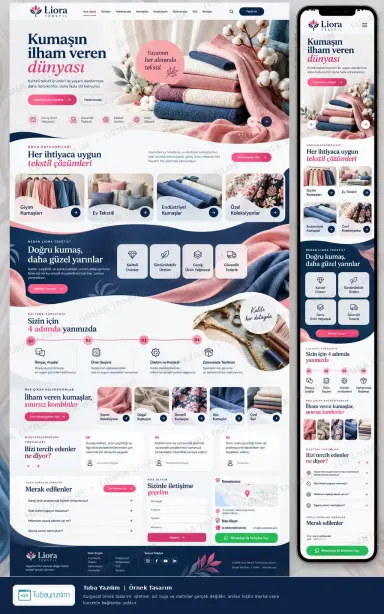
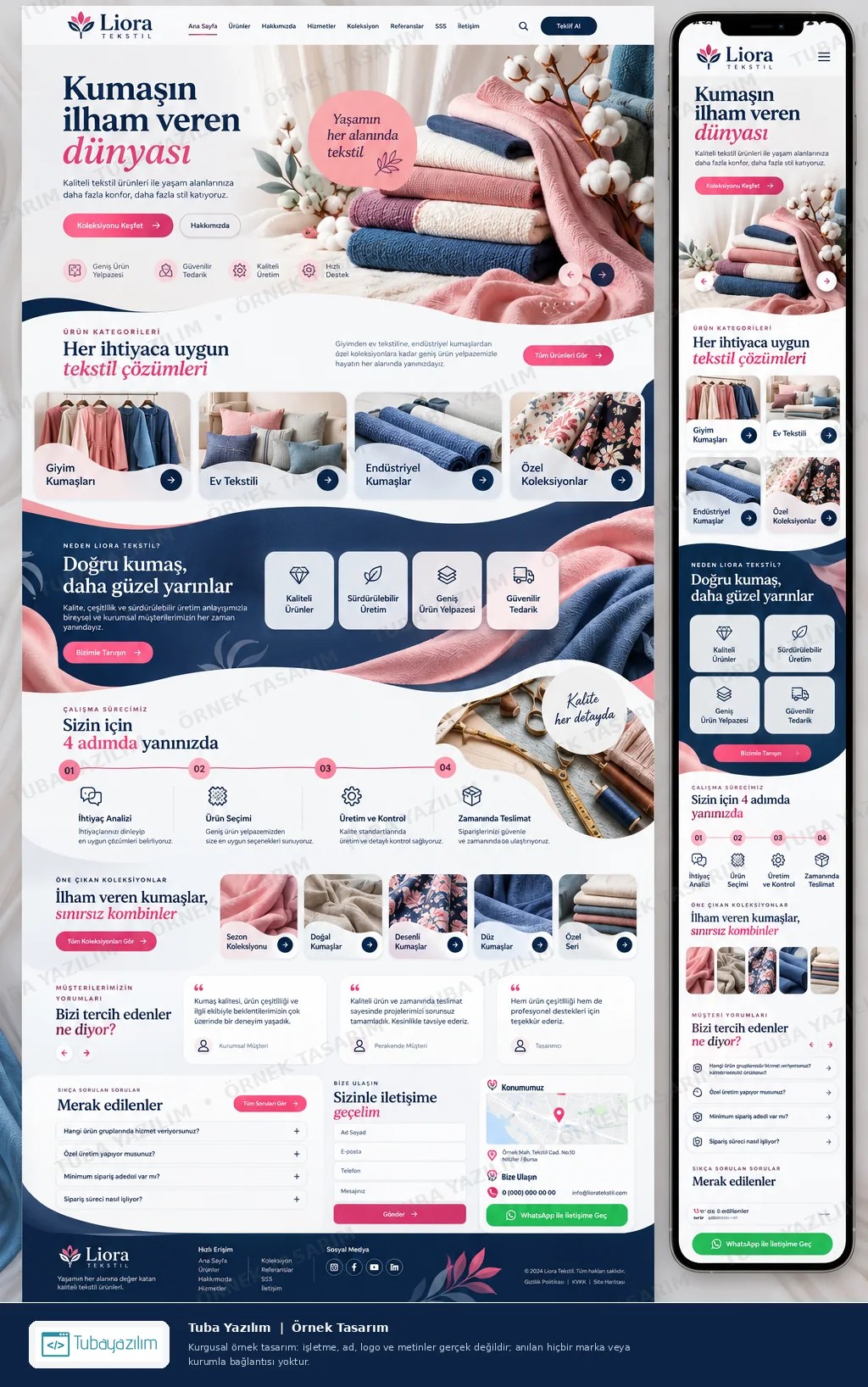
Navy and pink layout with folded fabrics hero, fabric category cards, trust icons, steps and product strip.
What should a fabric shop or textile trader website include?
The site has to describe a tactile product with words and pictures good enough to make a decision, or at least to start a sample request.
- Fabric families such as clothing fabrics, home textiles, upholstery, curtains and specialised or custom collections
- Close-up photos showing weave, drape and colour in natural light
- Practical details for each family: composition, width, weight, care and common uses
- A sample or swatch request page explaining how it works and what it costs to arrange, handled in conversation
- A trade page for tailors, boutiques, designers and wholesale buyers, with minimum quantity guidance in general terms
- A WhatsApp button inviting a photo of a reference fabric or a project brief
- A short process: choose, request swatch, confirm quantity, collect or deliver
- Shop or warehouse address and hours, if visitors can attend
The sample places fabric families high on the page and keeps process icons beneath, so trade visitors can navigate quickly.
How do customers in the UAE look for fabrics and textile suppliers online?
Retail customers and trade buyers search differently. A tailor or abaya maker looks for a particular weave or colour and wants to confirm availability. A designer looks for a source that can supply the same material again. A homeowner wants curtain or upholstery fabric that suits a room.
All of them judge quality by photographs and by how precisely the shop describes its range. Contact usually happens by WhatsApp, often with a photo of a reference fabric and a request for something similar.
Textile districts and well-known markets draw visitors who already know where to look, so a site should present the shop as identifiable and organised rather than hidden. Bilingual English and Arabic pages, and perhaps simple descriptions for other common languages, help serve the range of buyers. If the shop has a physical location, its map listing should be its own.
What should a textile business prepare before the site is designed?
Textile claims such as composition, origin and care should be accurate and consistent with labels. Labelling and import rules exist, so confirm requirements with the relevant authority or a lawyer, and avoid claims you cannot support.
| Prepare | Used for |
|---|---|
| Photos in natural light | Fabric family pages |
| Composition, width and care data | Product descriptions |
| Swatch and sample policy | Request page |
| Trade and bulk terms in general | Trade page |
| Shop or warehouse details | Contact and map |
We do not build online shops, so the site supports enquiries and samples. Remote delivery from Istanbul covers design and development.
Frequently asked questions
Can customers buy fabric by the metre on the website?
We do not build online shops or payment systems. The site presents fabric families and sends visitors to WhatsApp or a request form to confirm availability, quantity and arrangements with you. For a tactile product, a conversation and a swatch often matter more than a basket.
How should colour accuracy be handled on screen?
Screens vary, so state this plainly and invite customers to request a swatch. Photograph fabrics in natural light, include a close detail and, where possible, a wider drape shot. Describing colour in words alongside images also helps those who read on different devices.
Should trade and retail customers have separate pages?
Yes. Tailors, designers and wholesale buyers ask about quantities, repeat supply and delivery, while retail customers ask about suitability and care. Separate pages let each see relevant information, and a shared WhatsApp contact keeps enquiries simple for your team.
How does the remote process work?
We work from Istanbul, one hour behind the UAE, using WhatsApp and email. You provide fabric photos, descriptions and trade information, review the design and approve it. Tooba Web has no UAE office, and payment is by invoice and bank transfer.