Website Design for Textile Machinery Suppliers in the UAE
A machinery buyer wants to compare models, read specifications and reach a person who can answer technical questions. This page explains how a supplier's site can do that clearly.
A website for a textile machinery supplier in the UAE should organise machines by type, show specifications and applications in a readable form, and explain delivery, installation and spare-parts support. It needs a technical enquiry route by WhatsApp or form, plus English and Arabic content for buyers across the Gulf.
Last updated:
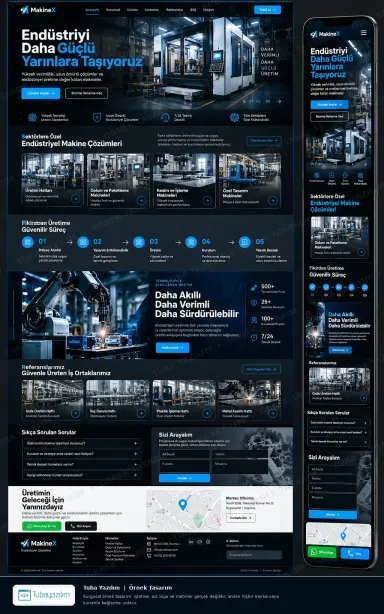
Sample website design for Textile Machinery Suppliers
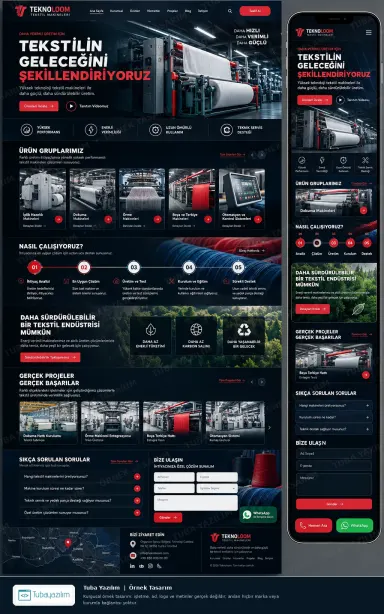
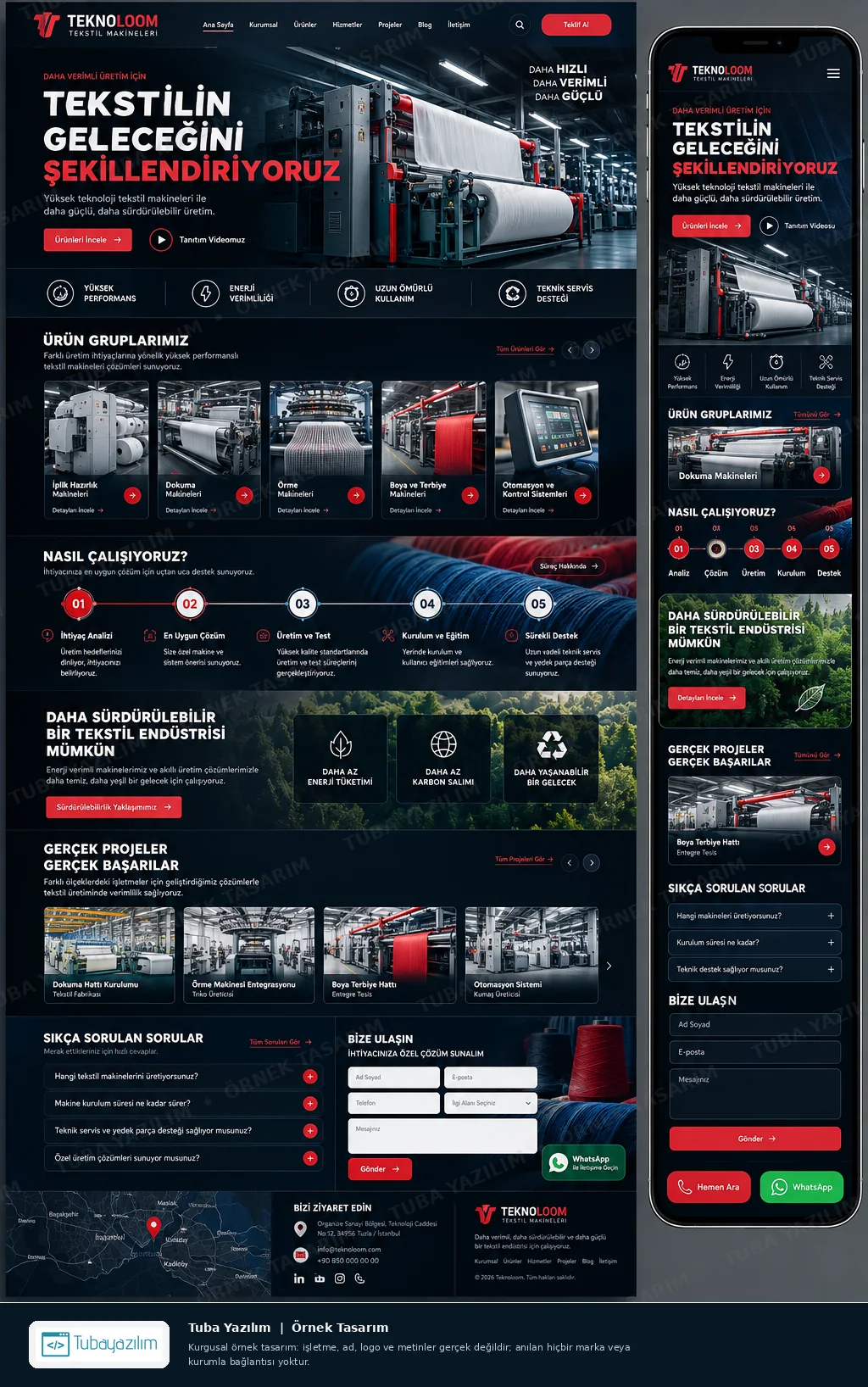
Dark industrial layout with a machine-group grid, five-step process, project gallery, FAQ and enquiry form.
What should a textile machinery supplier website include?
Visitors arrive with a specific question about a loom, knitting line or finishing unit, so the site must answer it quickly. These are the sections that carry the most weight.
- Machine groups (weaving, knitting, dyeing, finishing, spinning) each with its own page so buyers can reach the right family directly
- Specification tables per model: working width, speed range, power needs, footprint, written in units the buyer uses
- Photos and short videos of machines running, with captions saying what fabric or yarn is being processed
- A plain description of the sales process: enquiry, technical meeting, quotation, delivery, installation, training
- Spare parts and service information, including how a fault is reported and who responds
- A downloadable catalogue or datasheet per model, offered in English and Arabic
- Sustainability notes where relevant, such as energy or water handling of a machine
- A technical enquiry form that asks for fabric type, volume and plant location before anyone replies
How do buyers in the UAE find and choose textile machinery suppliers online?
Machinery is researched slowly and compared closely. A buyer in Sharjah or Dubai may search for a machine type, open several supplier sites, and send the same specification list to each. The supplier whose pages answer technical questions without a phone call tends to be contacted first.
Many buyers read English, while some decision makers prefer Arabic or the language of the machine's country of origin, so a bilingual structure is useful. Contact is rarely a formal form alone; a WhatsApp number that reaches a technician or sales engineer is often how first questions are asked. Because purchases are large and cautious, pages should show how a supplier handles commissioning and after-sales, not just the machine.
What should a textile machinery supplier prepare before a website is designed?
Preparation decides how credible the site feels. Gather accurate datasheets, machine photographs taken in a working plant, and a clear statement of which brands or models you represent and in what capacity.
Be precise about whether you manufacture, assemble or distribute, because buyers read that distinction closely. Trade licence details, certificates and any import documentation you wish to display should be checked for accuracy; confirm requirements with the relevant authority or a lawyer where unsure. Tooba Web designs and builds the site remotely from Istanbul and does not sell online; enquiries lead to a quotation conversation, which is how machinery is normally sold.
Frequently asked questions
How should machines be organised on the site?
Group them by process stage, such as weaving, knitting, dyeing and finishing, then by model. Each model page carries specifications, applications, photos and an enquiry button. This lets a buyer who knows the process stage find the machine, while a newcomer can follow the groups to learn what exists.
Can the website take orders for machines?
We do not build online shops. For machinery that is the right approach anyway: the site is built to start a technical conversation, collecting machine type, fabric and volume, then routing the enquiry to your sales team by WhatsApp or email for quotation, with payment handled offline by invoice.
Is Arabic content necessary for a machinery supplier?
Not always, but it often helps. English may cover most technical buyers, yet Arabic pages for key products, contact details and service information reach owners and procurement staff who prefer it. We can structure the site for both languages so that Arabic can be added in stages.
How does the remote design process work?
We work from Istanbul, one hour behind the UAE, and agree the structure, content and designs with you over WhatsApp and video calls. You supply datasheets and photographs, we design the pages from scratch, and you review them before launch. There is no UAE office; everything is delivered online.