Website Design for Textile & Garment Printing Companies in the UAE
Customers come with a logo, a quantity and a deadline. A printing company's website should help them describe the job and get a quote without a long back-and-forth.
A website for a textile and garment printing company in the UAE should show print methods, product types and finished work, then guide the visitor to a quote request with artwork. It needs a clear order process, file guidance and WhatsApp contact in English and Arabic.
Last updated:
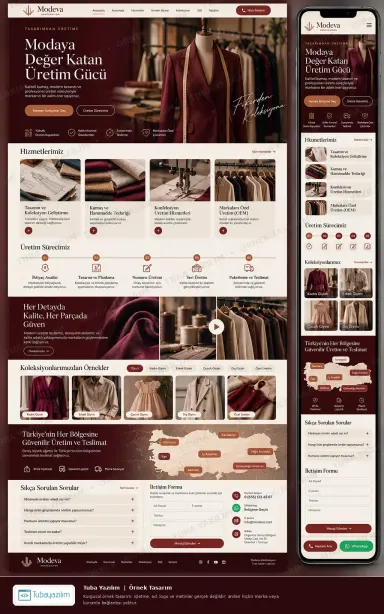
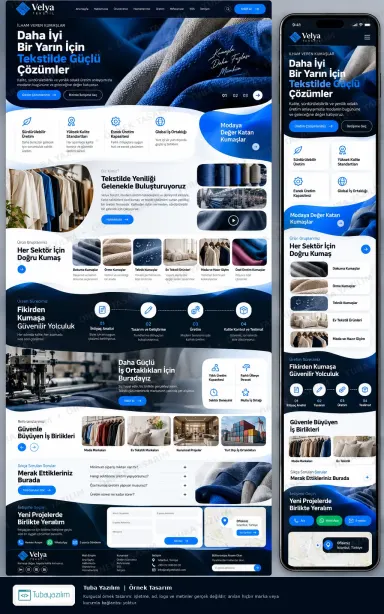
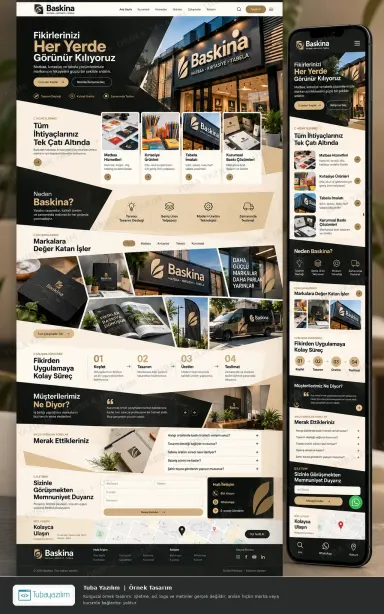
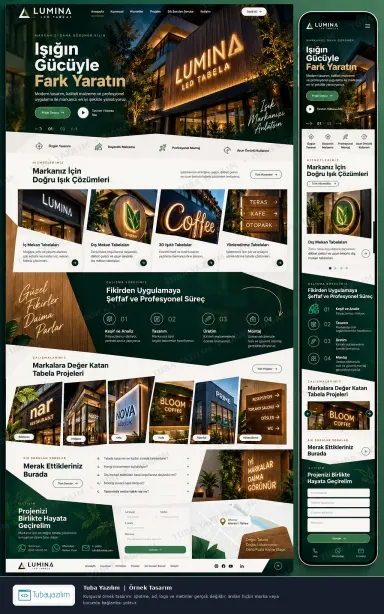
Sample website designs for Textile & Garment Printing Companies
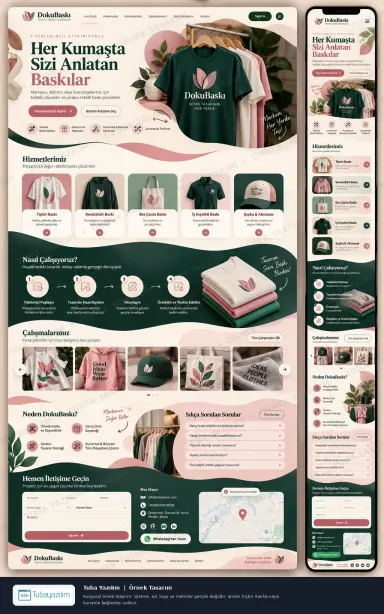
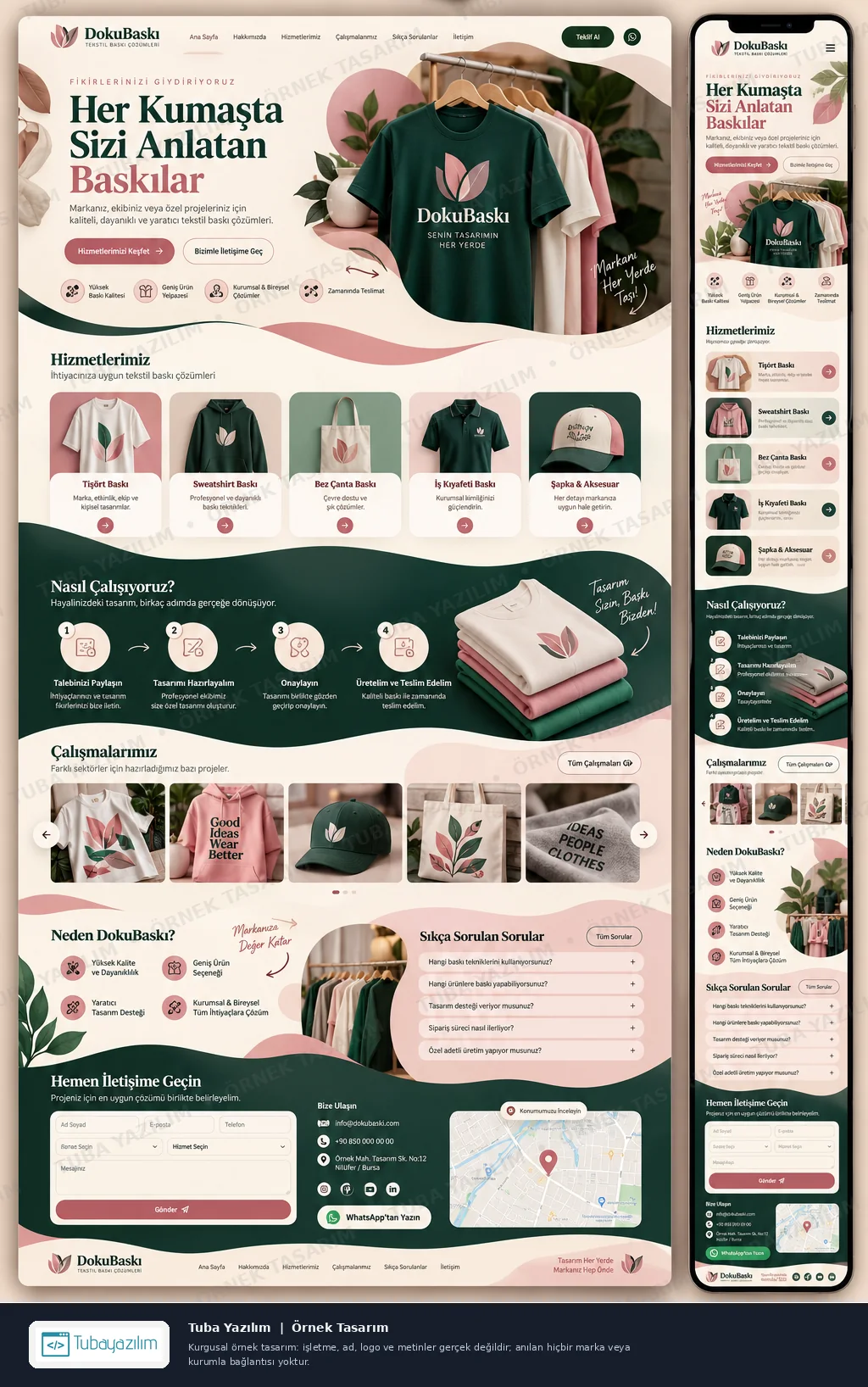
Pink and green layout: printed T-shirt hero, product tiles, process steps, work gallery, form. 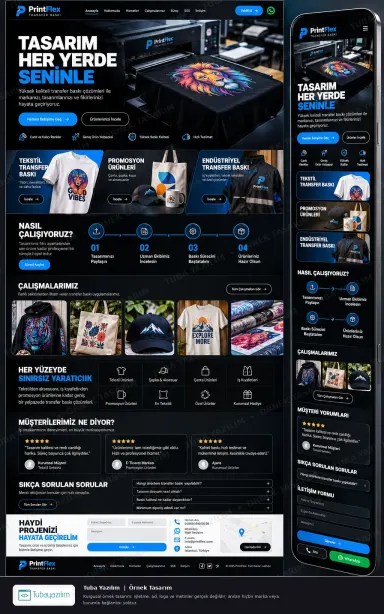
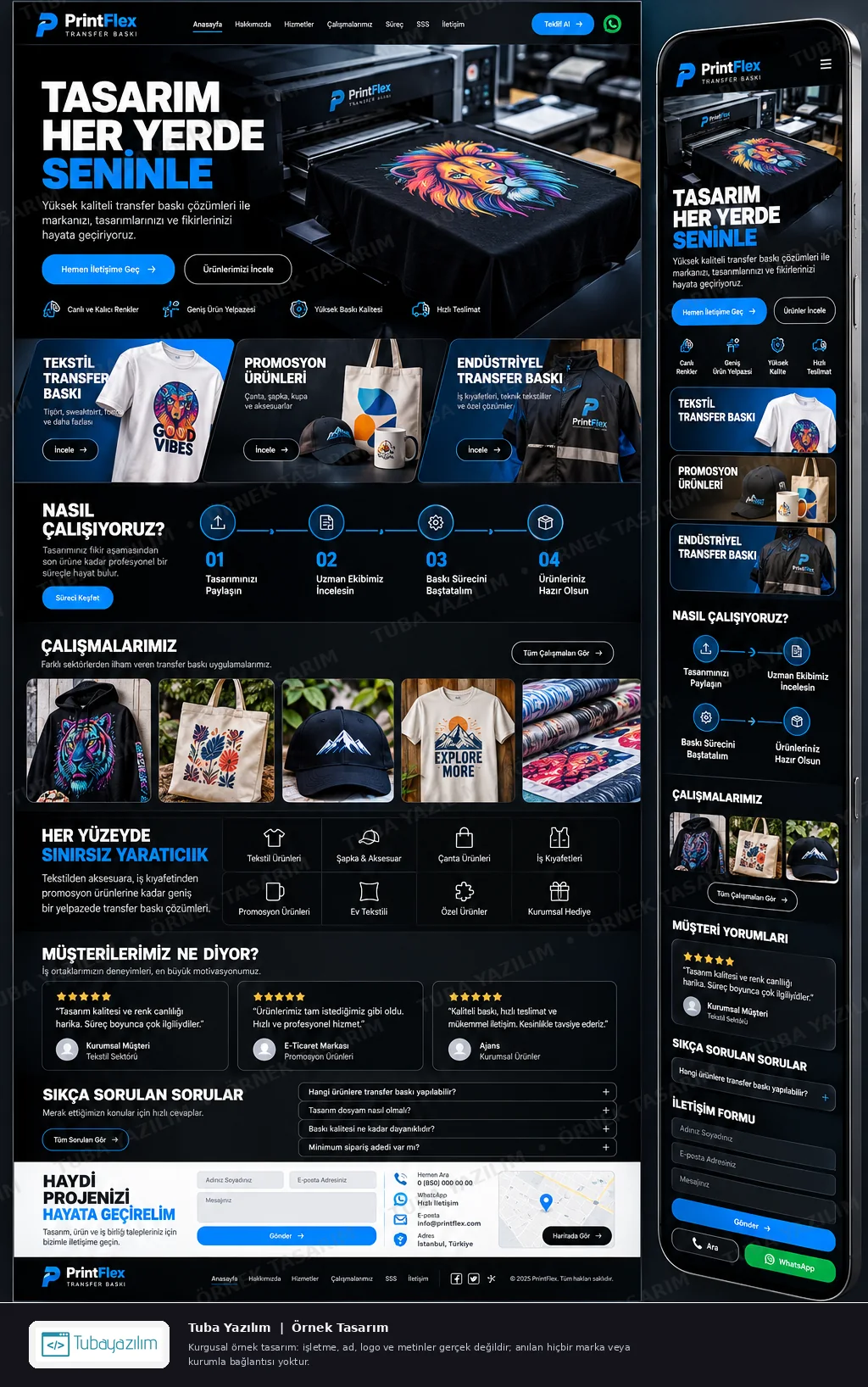
Dark navy layout with a heat-press hero, three print-type cards, four-step process, product gallery and form.
What should a textile and garment printing website include?
People searching for printed T-shirts, uniforms or tote bags need to see what you can print on, how, and what to send you. The site should answer those points directly.
- Product pages for T-shirts, hoodies, caps, bags and workwear, each with example work
- A plain guide to print methods such as screen, DTF, heat transfer and embroidery, and when each suits a job
- Artwork guidance: accepted file types, resolution, colour notes and how to send files
- A gallery of real finished items photographed clearly, grouped by product or industry
- A quote form asking for item, quantity, colours, print positions and deadline
- A numbered order process from artwork approval and proof to production and collection or delivery
- Corporate and event pages for staff uniforms, promotional items and team kits
- A WhatsApp button that lets a customer attach a design straight away
How do UAE customers look for textile printing services online?
Searches are usually practical: someone needs printed uniforms for a team, shirts for an event or merchandise for a small brand, and wants a supplier who can start quickly. Buyers often send a logo by message before they ever fill in a form.
Because speed matters, a WhatsApp-first route with a short checklist of what to include works better than a formal contact page alone. Customers also compare finished photographs, so a gallery with real work is more persuasive than icons. English is widely used, with Arabic helpful for companies and schools ordering in volume. Clear product names help the pages show up when people search for a specific item plus printing.
What should a printing company prepare before the website is designed?
Gather photographs of finished work first, because these carry the site. Aim for clean shots of each print method on different items, taken in consistent light.
List the methods, items and minimum quantities you actually accept, and write short artwork requirements in plain words. Prepare example brand names only where you hold permission to show them; printing logos you do not own can raise intellectual property issues, so confirm requirements with the relevant authority or a lawyer. Tooba Web builds the site remotely from Istanbul. It is a quote-led site, not an online shop, with payment by invoice or bank transfer.
Frequently asked questions
Can customers upload artwork through the website?
We can add a request form with guidance on file types and a field for links, and a WhatsApp route for sending files directly. Larger or custom upload handling can be scoped as custom development. In every case you review artwork before confirming a quote.
Can the site sell printed products online?
We do not build online shops or checkout carts. A printing site suits a quote-led service: the customer describes the job, you reply with a proposal, and payment follows by invoice or bank transfer. This suits custom work with different quantities.
How do we show the difference between print methods?
Give each method a short explanation, a typical use and a photograph of a real item. Add a note on minimum quantities and fabric suitability. This helps customers choose and reduces enquiries that cannot be fulfilled.
Do you provide Arabic and English versions?
Yes. We can design in English with Arabic pages or build both together, including right-to-left layouts. For a printing business, Arabic order guidance and contact details are often useful for corporate and school customers. The work is carried out remotely from Istanbul.